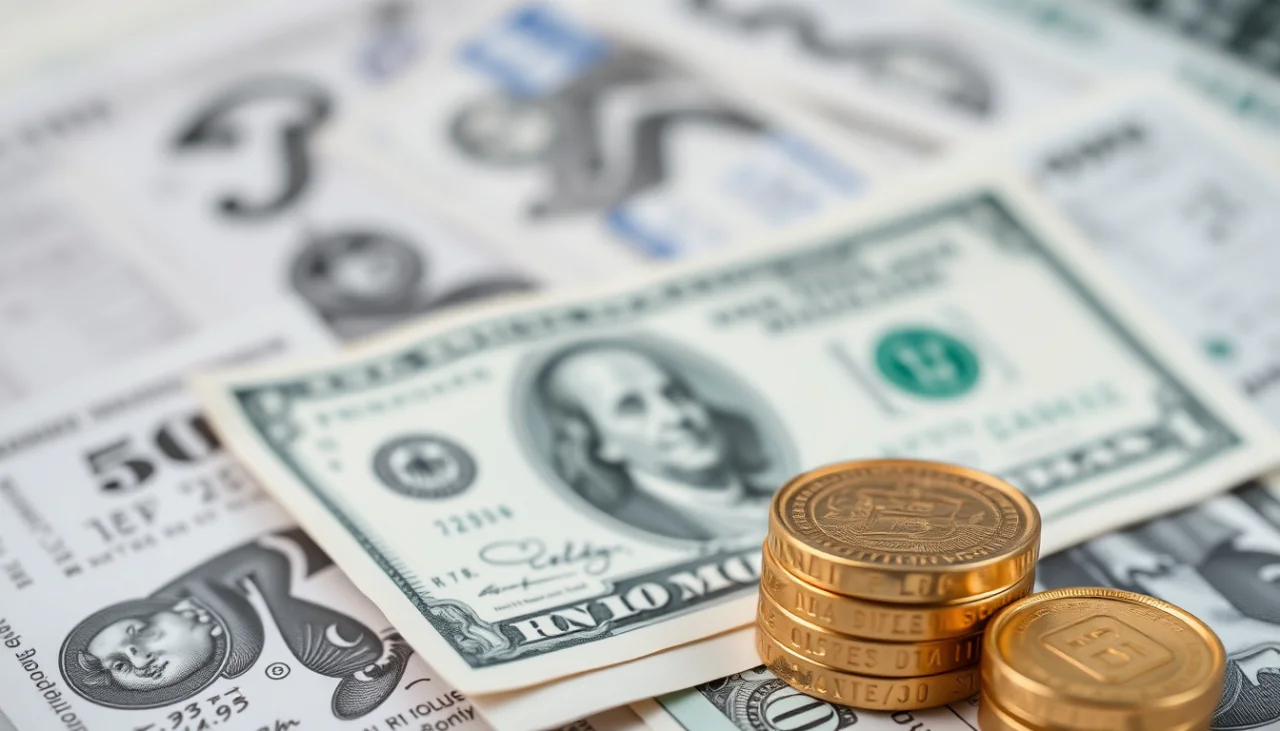
On Friday (July 24, 2026), the commercial dollar showed virtually no change, closing at R$ 5.081, while the Ibovespa fell 1.52%, reaching 174,041 points. The movement occurred on a day of investor caution amid new developments in international trade and the Middle Eastern geopolitical scenario.
The dollar quotation opened at R$ 5.09, touched R$ 5.04 around noon, and returned close to stability by late afternoon, registering a drop of only 0.06% on the day. For the week, the American currency accumulated a depreciation of 0.58% against the real.
Exchange rate behavior was mainly influenced by external factors: the entry into force of United States tariffs ranging from 10% to 12.5% on sixty trading partners, including Brazil, and news about a possible resumption of negotiations between Washington and Tehran, mediated by Pakistan and supported by China.
Despite the pressures, the real performed relatively better compared to other emerging market currencies. This is due to the fact that Brazil is a net oil exporter and to the domestic interest rate differential compared to the United States, which continues to attract capital flows to the local market.
In the stock market, the Ibovespa ended the trading session at the day's low, with a loss of 1.52%. Despite the daily drop, the index managed to accumulate a 0.19% gain for the week. The pullback was driven by sales of oil company, mining, and financial institution stocks, reflecting the outflow of foreign resources and profit-taking after the recent appreciation of oil.
Oil prices also fell: Brent crude, the benchmark for Petrobras, closed at US$ 96.78, down 3.88%; Texas WTI traded at US$ 89.31, with a depreciation of 3.12%. On Thursday (23), Brent had surpassed the US$ 100 barrier for the first time since May, but gave up some of its gains following reports that China was seeking to facilitate dialogue between the US and Iran.
In addition, the National Industry Confederation (CNI) estimates that a 37.5% tariff on nearly four thousand Brazilian products could be applied as a consequence of the new US trade measures. Market agents state that part of this impact was already priced into the assets.
The DXY index, which measures the value of the dollar against a basket of hard currencies, ended the day virtually stable. Investors remain attentive to tariff developments, negotiations in the Middle East, and capital flow indicators for emerging economies.





Sign in to comment on this article.
No approved comments yet.