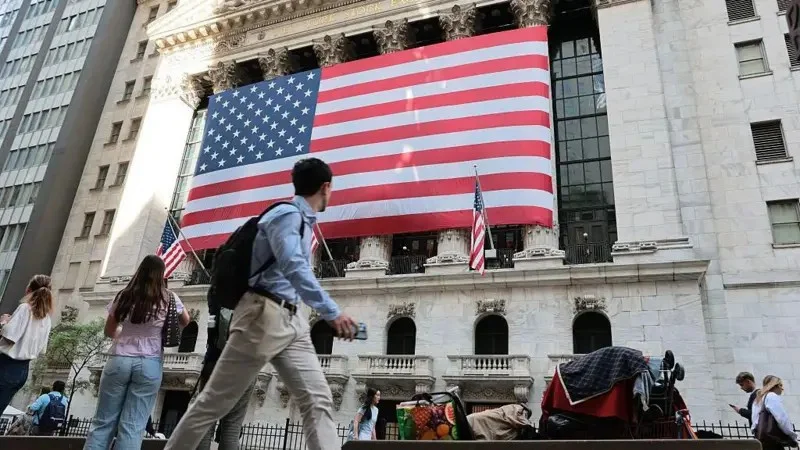
How the US economy continues to outperform its rivals despite all the Trump administration's turmoil Getty Images via BBC In Dresden, eastern Germany, a final automobile rolled off the assembly line last year at Volkswagen's "Transparent Factory," which was something of a symbol of Europe's industrial might. Thousands of miles away, in Spartanburg, South Carolina, another German giant, BMW, operates its largest factory in the world. The contrast between the two helps explain an enigma long debated by economists: why the US economy continues to outperform many other countries while facing the same global shocks? In recent years, a succession of economic shocks has shaken much of the developed world. Donald Trump's import tariffs have disrupted global trade. Mass immigrant deportations are reshaping the labor market.
The conflict in the Middle East has caused oil prices to soar. Trump's massive tariffs: decisive hearing on Brazilian products closes registration; see how it works Trump's VP talks about 'turning the page' in relations with Iran during talks in Switzerland Many economists expected the United States to suffer severe shocks under the weight of these pressures. But the country's economy has continued to grow steadily. Inflation has persisted at times, but the combination of weak growth and continuous price increases, feared by many, ultimately did not happen. Joe Brusuelas, chief economist at British consultancy RSM, argues that the trade war was the ultimate test of American resilience. "The government's own self-imposed targets regarding trade and immigration are probably the clearest example of the dynamism underpinning the US economy," he points out. When faced with the sudden taxation of foreign components, American companies did not settle for reduced margins and instead invested more aggressively. "Capital investment right now stands at 13.9% of US GDP," according to Brusuelas.
"It should be declining, considering the various supply and demand shocks absorbed by the economy, but that is not happening." On the other hand, much of the pressure has been offset by remarkable productivity growth. The broader US economy continues to expand at an annual rate of about 2%. Energy markets offer another explanation.
The war in the Middle East drove up oil prices, which historically would have posed a considerable threat to American growth. But the shale oil revolution fundamentally altered US vulnerability to energy sector shocks. Over the past two decades, the country has become one of the largest oil and gas producers on the planet, while its companies have progressively reduced their dependence on petroleum. "The development of fracking (hydraulic fracturing, a mining technique used to extract natural gas and oil from deep shale rock formations) in the United States since the early 2000s and the evolution of alternative fuels have created conditions where oil's contribution to GDP per unit of energy has halved over the last 50 years," explains Brusuelas. The contrast with Europe is stark. While the United States focused on flexibility, capitalizing on fracking and allowing prices to react freely to the market, Europe relies on long-term contracts and interconnected supply networks to ensure its energy security. This strategy left many countries exposed to risks from the interruption of Russian gas supplies following the invasion of Ukraine. And with current tensions in the Middle East, that vulnerability remains. For Rebecca Christie, a researcher at the Bruegel think tank in Brussels, Belgium, this discrepancy is evident not only in policy decisions, but in cultural attitudes toward risk. "Americans are very solution-oriented and much more comfortable taking immediate risks with an eye on long-term payoffs," she explains.
"Europe, by contrast, is culturally much more risk-averse." Christie recounts attending an event where the European Union's own financial services chief stated that Europeans do not talk enough about the risk of not taking risks. Differences in corporate structures and pension systems on both sides of the Atlantic also reflect this differing worldview. In much of Europe, companies rely heavily on bank loans for financing, and workers' pensions are frequently tied to guaranteed insurance contracts that set limits on both losses and gains. "If you finance your company with a bank loan, you don't have the same flexibility offered by selling stock or attracting venture capital," Christie explains. In the United States, companies can tap investors and the stock market for funding. This flexibility, despite its ups and downs, gives American firms an advantage over state-backed European models. Christie cautions, however, that macro-level resilience can mask a real problem.
"The United States is a land of extreme inequality," she states. "If you find yourself in trouble, you will truly face tough times because the labor market is not expanding significantly, everything is getting more expensive, and many cities are suffering from housing crises." Her biggest concern is that inequality will reach a tipping point. "Having a very stable dollar and banking system won't help if there is a jobs crisis in the real economy," the researcher explains. The US is not immune to pressures So far, there is little evidence of this happening. In fact, US employers added 172,000 jobs in May, defying all expectations. But new inflation data shows the largest increase in consumer prices in three years. Annual inflation stood at 4.2% in May, up from 3.8% in April.
These figures indicate that the United States may be approaching the limit of its resilience. The US economy may be outperforming most of its rivals, but that does not mean it is immune to pressures. High fuel prices, persistent inflation, and widening inequality pose risks that could erode the country's current advantage. Still, compared to many other developed nations, the United States economy remains robust. Its combination of flexible markets, rapid investment, abundant energy, and risk tolerance has helped the nation weather shocks that have hit other countries hard. "It's the cleanest shirt in a very dirty hamper," concludes Joe Brusuelas.



Sign in to comment on this article.
No approved comments yet.