Fossilized skulls of three beaked whales recovered from the sea floor. The image shows two extinct beaked whale species, Pterocetus diamantinae (new species to science, top) and Izikoziphius rossi (the second skull), as well as Andrews' beaked whale Mesoplodon bowdoini (two skulls at the bottom), an extant species. Global TREnD/IDSSE/Disclosure A vast whale graveyard hidden deep within the Indian Ocean has revealed a history spanning millions of years.
Researchers from the Chinese Academy of Sciences have discovered an underwater necropolis with fossils and carcasses distributed along approximately 1,200 kilometers in the Diamantina Zone, a region between Australia and Antarctica. The study, published in the scientific journal "Nature", identified 485 sites containing cetacean remains and five active whale falls — the name given to carcasses that sink to the ocean floor and begin to sustain entire communities of organisms. The discovery may represent the deepest and most extensive known accumulation of whale fossils and carcasses ever recorded, besides offering an unprecedented window into the evolution of these marine mammals over the past 5.3 million years. What is a "whale fall" When a whale dies and sinks, its carcass carries a massive amount of organic matter to the deep sea. In extremely food-poor environments, these remains function as true biological oases. Now on g1 The researchers found five active communities associated with carcasses located between 4,625 and 6,789 meters deep.
Some of them were dominated by bone-eating worms, brittlestars, mollusks, and bacteria capable of obtaining energy through chemical processes without relying on sunlight. In total, 35 macrofauna groups were documented. According to the authors, a large portion of the species found may be new to science. Furthermore, the scientists recorded organisms at depths much greater than previously known for this type of ecosystem.
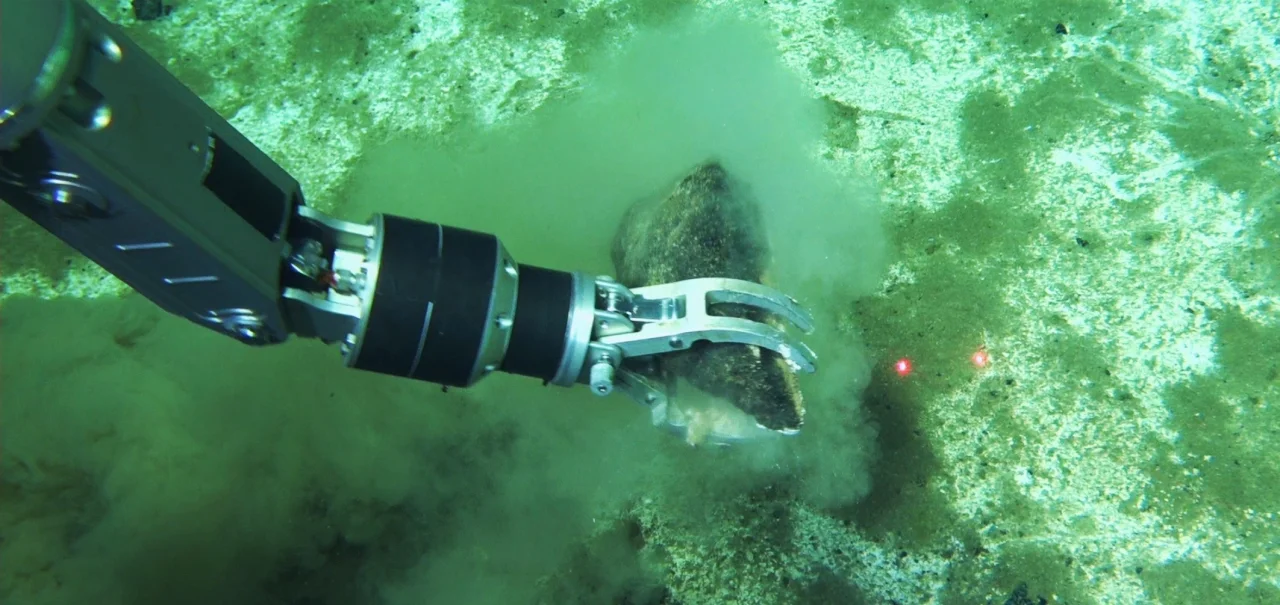
The whale falls of the Diamantina Zone extend the known limit of these habitats by more than 2,500 meters. Recovery of fossilized whale bones using the manipulator arm of the Chinese submersible Fendouzhe at the bottom of the Diamantina Zone sea. Global TREnD/IDSSE/Disclosure Fossils up to 5.3 million years old To determine the age of the remains found, the team analyzed the isotopic composition of 33 fossils. The results indicated ages between approximately 120,000 years and 5.26 million years. The oldest fossil belongs to an extinct beaked whale of the genus Pterocetus. According to the researchers, this shows that whale falls have been occurring in the region since at least the early Pliocene, an epoch when the global climate was significantly warmer than it is today. The team also identified fossils of modern beaked whale species that still inhabit the Indian Ocean, suggesting an impressive ecological continuity over millions of years. Map of the "whale graveyard" located in the study Disclosure/Nature New extinct whale species Among the finds is a new species named Pterocetus diamantinae. The fossil consists of part of the skull of an extinct beaked whale found at nearly 6,900 meters deep.
Anatomical analysis showed features distinct enough to classify it as a previously unknown species. The discovery broadens knowledge about the evolution of beaked whales, one of the most enigmatic groups of cetaceans. Why did so many whales die there? The extraordinary concentration of whale remains led researchers to investigate the origin of the necropolis. The main hypothesis involves a combination of several factors. The region is situated on a route frequented by migratory whales and harbors favorable conditions for the feeding of beaked whales, which perform some of the deepest dives in the animal kingdom. Furthermore, the valley-like topography can act as a natural trap for sunken carcasses.
Another important factor is the extremely low sedimentation rate in the region, which allows bones to remain exposed and preserved for hundreds of thousands or even millions of years. According to the authors, the combination of these elements can explain the formation of the massive fossil deposit. Impact of the discovery Scientists state that the necropolis transforms the understanding of deep-sea ecosystems. Whale falls can function as connection points between extreme habitats, such as hydrothermal vents and cold seeps on the ocean floor, helping specialized organisms disperse over long distances. Additionally, the site constitutes a rare natural archive of the evolutionary history of beaked whales. Because these animals are rarely observed alive and are frequently known only from occasional strandings, the preserved fossils offer a unique opportunity to reconstruct their evolution, distribution, and ecology over millions of years. How was the study conducted? Researchers performed 32 dives with the manned submersible Fendouzhe between February and March 2023, covering about 1,200 kilometers of the Diamantina Zone.
485 sites containing fossils or carcasses were recorded, and samples were collected for biological, anatomical, and geochemical analyses. The age of the fossils was estimated by strontium isotopic dating on 33 specimens.
Among the strengths are unprecedented access to depths of up to 7,000 meters and the combination of paleontology, ecology, and genetics. As caveats, only a small fraction of the total area was observed directly, and the hypotheses to explain the concentration of whales in the region remain inferential, without direct proof.





Sign in to comment on this article.
No approved comments yet.