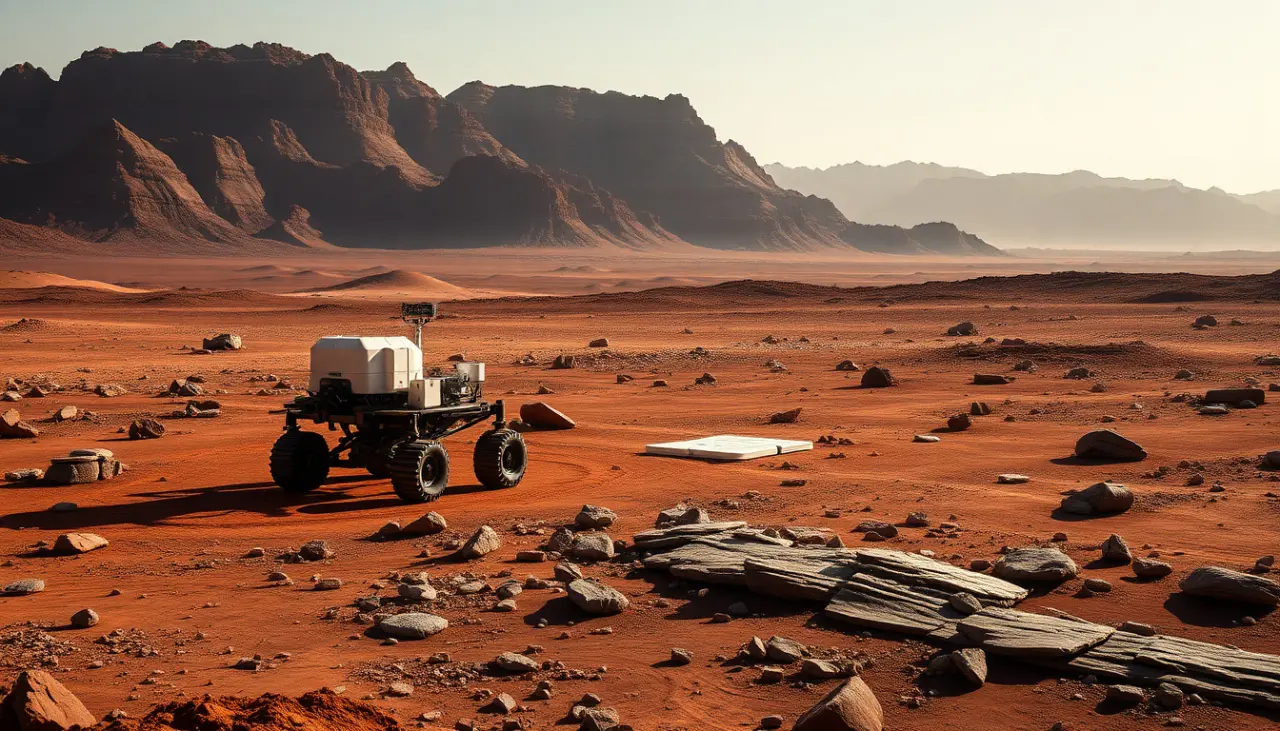
NASA's Perseverance rover has identified geological evidence on Mars dating back more than 3.9 billion years. Located near Jezero Crater, the rocks form a historical record of the Solar System that remains preserved due to the absence of plate tectonics on the Red Planet, something that prevents the conservation of similar data on Earth.
The discovery occurred in the geological formation called the Broom Point member. It is a sequence approximately 75 meters thick, composed of several layers of rocks accumulated gradually. According to researchers, these layers were built by the accumulation of debris generated by successive asteroid impacts during a period of intense activity in the Solar System.
During the analyses, the rover identified six distinct types of rocks, including breccias with fragments of broken rocks and thin layers of dust. Dark particles with a glassy appearance were also found, which scientists believe to be the result of space collisions, given the large amount of material, similar to what was released into the Earth's atmosphere during the extinction of the dinosaurs.
The vertical tilt of some rock layers suggests that the region was shaped by major impact events. The hypothesis raised is that the area was influenced by two distinct major impacts: the first would have formed the Isidis Basin, deforming the original layers, and the second would have created Jezero Crater itself, fragmenting the already tilted structures.
The preservation of these materials is considered a rare opportunity for science. Unlike Earth, where the recycling of the Earth's crust erases ancient records, Mars keeps these layers intact. The study, published by the American Geophysical Union (AGU), highlights that the collected material can offer a detailed view of the asteroid bombardment that occurred billions of years ago.
To further the investigation, Perseverance collected rock core samples, named Bell Island and Main River. If these samples are brought to Earth in future missions, it will be possible to determine with precision the exact age of the rocks and understand the frequency with which asteroids hit the planet in the primitive era.






Sign in to comment on this article.
No approved comments yet.