Venezuela receives another 1,000 foreign rescuers to help in the search for survivors
Local and international rescue teams raced against time this Monday (29) to pull survivors from the rubble in Venezuela, on the fifth day after twin earthquakes caused at least 1,450 deaths. According to a UN estimate, there are still about 50,000 people missing in the country.
LIVE: See the latest updates on the earthquake
✅ Follow g1's international news channel on WhatsApp
Even with the chances of finding survivors decreasing by the hour, rescue teams still manage to find people alive in mountains of wreckage, offering a brief glimmer of hope to distressed families.
The first 48 to 72 hours after a natural disaster are crucial for rescue efforts, and experts believe that after this period, the task basically turns into recovering bodies. Even so, rescuers saved 33 survivors on Sunday, according to the government.
Operations are complex, require manual labor, and have been hindered by the heat, according to reports from rescuers. Those closely following the rescue efforts say the smell of decomposing bodies is increasingly intense.
Even so, there is hope for more survivors, despite experts stating that the first 72 hours after natural disasters define the narrow window to rescue survivors. After that, searches generally shift to recovering bodies.
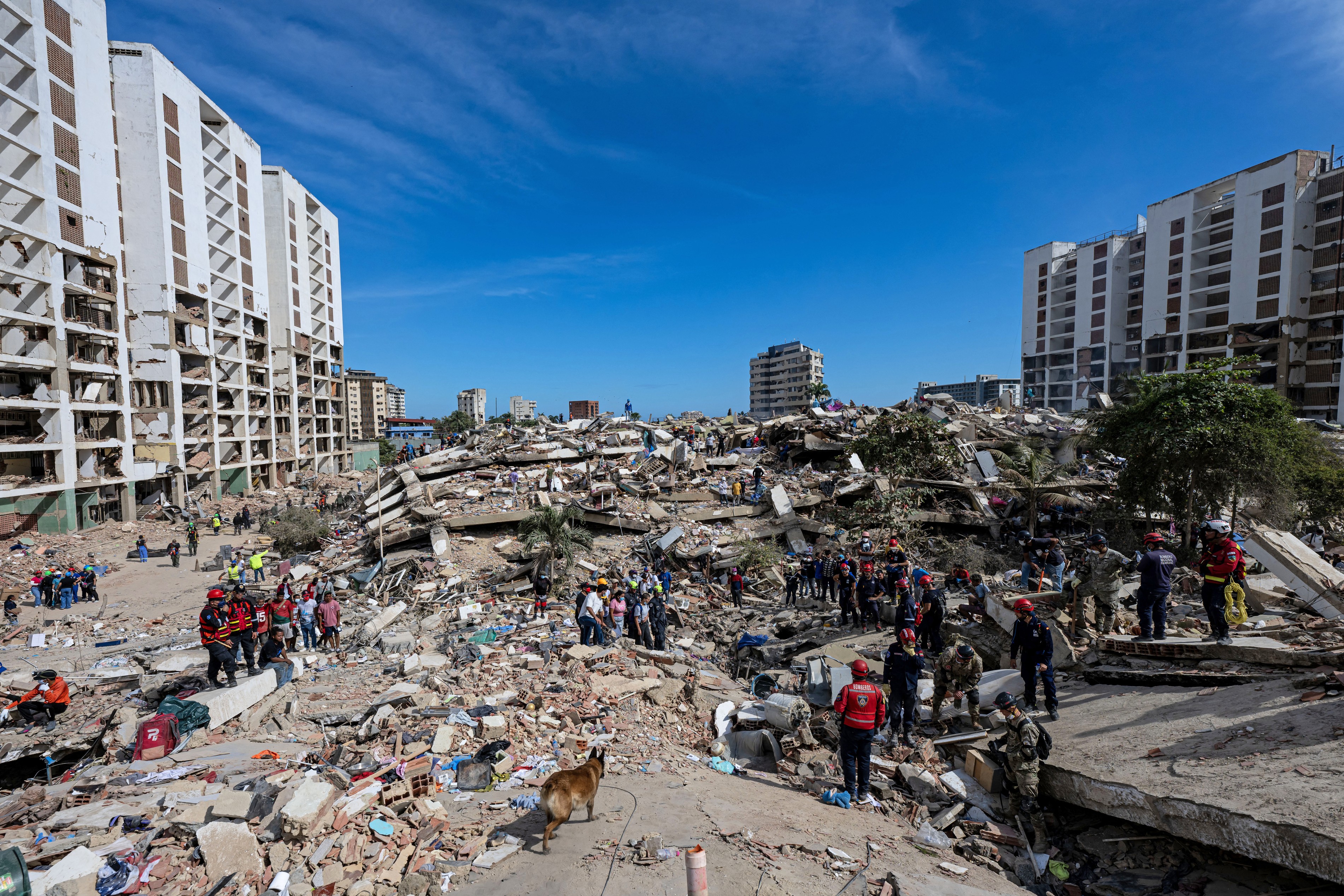
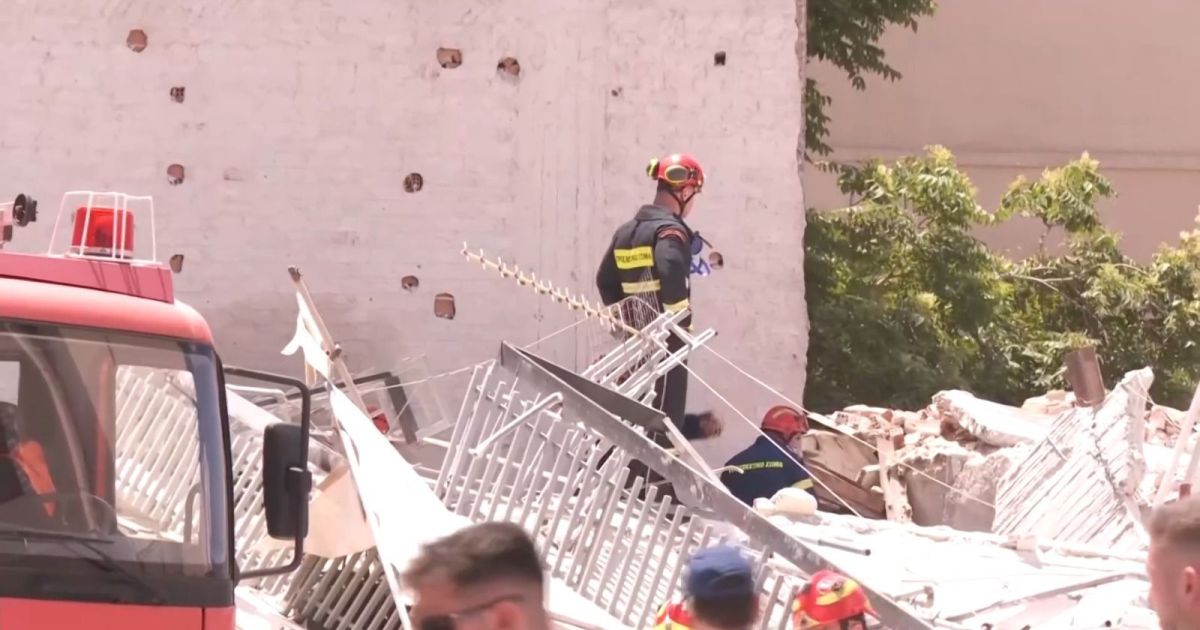
Rescue teams searching for survivors amid the rubble of buildings in La Guaira, Venezuela, on June 28, 2026.
Miguel Medina/Pool/AFP
Even with the chances of finding survivors dwindling this Monday and amid growing public frustration with the government's response, volunteers continued relentless work among the rubble.
"Everyone says there's no one left, but we're still here. Let's see if we can still pull out someone else," Eduardo Cardozo, a rural worker who traveled to help as a volunteer in rescue efforts in Tucacas, on the coast, almost 200 km east of Caracas, told the AFP news agency.
"The hardest part was when we felt hope in the tunnels we entered, crawling, removing rubble, doing a heartfelt job with a lot of faith, and when we reached the people, we found them lifeless," Luis Salas, another volunteer, told AFP.
Volunteers rest amid the rubble of buildings toppled by earthquakes, taking turns in the search for survivors in Venezuela on June 28, 2026.
Miguel Medina/Pool/AFP
In La Guaira, a state neighboring the capital Caracas and the hardest-hit area, international rescue missions arrived en masse on Sunday. In previous days, residents had expressed frustration and outrage at the country's inefficient disaster response, which ended up being led by civilians.
Interim President Delcy Rodríguez called for operations to continue and announced plans to care for people who lost their homes due to the numerous collapses. More than 770 buildings partially or totally collapsed, including residential and commercial buildings and dozens of hospitals.
The impact of the 7.2 and 7.5 magnitude earthquakes that struck the country on Wednesday affected up to 6.8 million of Venezuela's nearly 30 million inhabitants, the UN estimates. The risk of further damage remains, as aftershocks continued to hit the country. Tremors of magnitude 4.2 and 4.5 occurred on Sunday morning.
Rescue of father and son moves onlookers
Rescue efforts intensified on the fourth day after the earthquakes that devastated the state of La Guaira.
Maxwell Briceno/REUTERS via DW
On Sunday, in La Guaira, a crowd gathered around a mountain of rubble as they watched rescue teams from the United States, France, and Venezuela pull a man and his son from a crevice in the concrete, covered in dust and barely responsive.
They were placed on a black tarp and carefully led through the crowd to an ambulance to receive intravenous hydration. The moment was marked by relief and applause, and soon after, the teams continued their work.
In another part of the state, Helen Guedez and her mother were in shock. According to the AP news agency, they had spent days trying to save their father, Jesús, from the apartment where they were.
American rescue teams inspected the building and confirmed the man was still alive under the rubble. But they told the family that the structure was too unstable to enter and rescue him.
They left the site, but Guedez said she would continue trying to rescue her father without their help. According to her, they were now working with civil volunteers and local miners to get him out. "We are not going to give up," she told the AP. "The rest of the team is willing to keep going. They know there is another way to get him out and they said they are going to keep working until the end."
The government reported that more than 14,000 military and police officers are patrolling the state of La Guaira, where access is blocked and special permits are required to enter.
As rescue operations continued at an intense pace, episodes of looting hit La Guaira, much of which is in ruins after Wednesday's disaster. Pharmacies, supermarkets, and other establishments were looted, residents said, some of whom complained about the slowness and scarcity of official aid following the earthquakes.
READ ALSO:
'Lower your weapon': residents' pressure leads military to help in rescues in Venezuela
Frustration grows over delayed rescues in Venezuela: 'There are buildings where not even a single stone has been removed'
Anatel technicians search for cell phone signals in the rescue of earthquake victims in Venezuela
Political test
Venezuela's interim President, Delcy Rodríguez, on April 30, 2026
REUTERS/Leonardo Fernandez Viloria
Delcy Rodríguez, who has been interim president for nearly six months following the U.S. capture of Nicolás Maduro in January, stated that search efforts "will not be suspended" and expressed that international rescuers have restored "hope."
Rodríguez stated that she has created a commission to assess damage to homes and verify whether it is safe for residents to return to the affected areas, emphasizing that the search for survivors will continue.
The tragedy represents a significant challenge for Rodríguez. The U.S. government has played an increasingly strong role in defining the country's future, while Venezuela has experienced a situation of economic disorder for over a decade.
The country now faces an even more difficult situation, Ronal Rodríguez, a researcher at the Venezuelan Observatory of the University of Rosario, told the AP.
Now on g1
The country now faces an even more difficult situation, Ronal Rodríguez, a researcher at the Venezuelan Observatory of the University of Rosario, told the AP. "There is political interference from the United States, the operational incompetence of a government that led the country into a complex humanitarian crisis, and, suddenly, an earthquake in a place that lacks human capital and immediate resources to deal with the situation."
The worst earthquakes in Venezuela in over a century occurred after more than a decade of economic collapse in an oil-rich country. The crisis weakened hospitals and public services, prompting millions of people to leave the country.
The United Nations estimated the material damage caused by the current tragedy at 6.7 billion dollars, equivalent to about 6% of the Venezuelan Gross Domestic Product (GDP).
Amy Pope, Director General of the International Organization for Migration (IOM), warned that the displacement of Venezuelans is expected to increase, as the crisis has already led 8 million people to migrate in the past decade.
Earthquakes in Venezuela: teams race against time to find survivors on the 5th day of searches
Venezuela receives another 1,000 foreign rescuers to help in the search for survivors Local and international rescue teams raced against time this Monday (29) to pull survivors from the rubble in Venezuela, on the qui...

Sign in to comment on this article.
No approved comments yet.