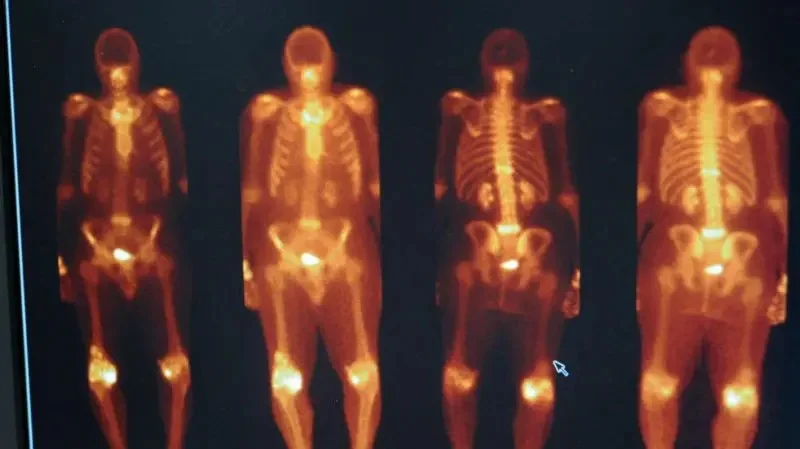
Technetium-99m is the most widely used medical isotope in the world as a radioactive tracer for disease diagnostics Getty Images A unit of the Institute for Energy and Nuclear Research (Ipen) in São Paulo recorded an incident with radioactive material involving two workers. The incident occurred on May 29 and was confirmed on Thursday night (11/6) by the National Nuclear Energy Commission (CNEN).
The Ipen building is located on the University of São Paulo (USP) campus. According to a CNEN statement, the episode involved the presence of traces of technetium-99 during the removal of biological sensors from an autoclave, equipment used in the production of radiopharmaceuticals — drugs used in diagnostic exams or therapeutically for tumor treatment. Radioactive incident at Ipen: what is known about technetium and health risks The incident took place at the institute's Radiopharmacy Center, which develops and supplies a comprehensive line of radiopharmaceuticals essential for diagnostic imaging and oncological therapies, serving hospitals, clinics, and research centers throughout the national territory. "The incident involved two workers — Occupationally Exposed Individuals (IOEs) — who underwent in vivo examinations (Whole Body Counter)," the CNEN statement reads. "The counts detected were low and demonstrated that there was no internal contamination.
The contamination was restricted to the controlled area of the Institute's Radiopharmacy Center." Ipen supplies radiopharmaceuticals to 430 clinics and hospitals nationwide, contributing to 2 million medical procedures annually, many of them related to the diagnosis and treatment of cancer patients. The internal occurrence report dealing with this incident was forwarded for analysis to the National Nuclear Safety Authority (ANSN). ANSN stated in a note that Ipen's Radiopharmacy holds a valid operating authorization. "As part of the regular supervision and regulatory monitoring activities of licensed facilities, a notification was issued with a deadline until June 18, 2026, to comply with the formulated requirements," the ASNS statement says. "The notification guarantees the facility the exercise of adversarial proceedings and a broad defense, and any additional measures will depend on the technical analysis of the information and documents presented by Ipen." According to the Union of Federal Public Service Workers in the State of São Paulo (Sindsef-SP), the cases came to light after the union and the Association of Ipen Servants (Assipen) sent a request for official information regarding the occurrence and the measures adopted to the institute's management and CNEN. Now on g1 What is technetium-99? Technetium — chemical symbol Tc on the periodic table — is a silvery-gray radioactive metal. According to the US Environmental Protection Agency (EPA), technetium occurs naturally in very small amounts in the Earth's crust, but is produced mainly in laboratories. Technetium-99 is produced during the operation of nuclear reactors and is a byproduct of nuclear weapons explosions. Technetium-99m is a short-lived form of Tc-99 used as a medical diagnostic tool. It does not remain in the body or the environment for long. Technetium-99m is the most widely used medical isotope in the world as a radioactive tracer for disease diagnostics.
The substance is injected into patients. Special cameras help form an image from the technetium present in the body. READ ALSO: Understand how the radioactive material incident at Ipen in SP occurred.





Sign in to comment on this article.
No approved comments yet.