People react as Red Cross workers walk in formation disinfecting the general hospital of Rwampara before handling the body of a person who died of Ebola, amidst efforts by humanitarian agencies to contain a new outbreak of the Bundibugyo strain, in Rwampara, on the outskirts of Bunia, Ituri province, Democratic Republic of Congo, in May Reuters The Democratic Republic of Congo confirmed the registration of 1,003 cases of Ebola in the country, including 254 deaths, on Sunday night (21). On Friday (19), a 6-month-old baby was buried after dying of Ebola in the east of the country.
On the same day, other deaths caused by the disease were confirmed in a camp for displaced persons. Since the beginning of May, there has been an increase in deaths considered unusual by local authorities and humanitarian organizations that manage the refugee camp.
Some of the victims had a confirmed diagnosis of Ebola, fueling concerns that the virus may be circulating undetected in one of the regions most affected by the current outbreak. Located in Bunia, the epicenter of the Ebola outbreak in the Democratic Republic of Congo, the Kigonze displaced persons camp houses more than 15,000 people who fled armed conflicts. According to the local administration, the site used to record between one and three deaths per month.
Just this week, however, ten residents were buried. Understand Ebola in 7 points The true scale of the outbreak is still uncertain. Until recently, residents and relatives of the victims resisted testing patients and bodies, according to humanitarian organizations working in the region. Although not all deaths have been officially attributed to Ebola, camp representatives, community leaders, and humanitarian workers state that many victims showed symptoms compatible with the disease, such as fever, headache, and vomiting. Kigonze spokesperson, Désiré Grodya Bapi, stated that health professionals managed to collect samples from five victims and that some of the tests came back positive for Ebola.
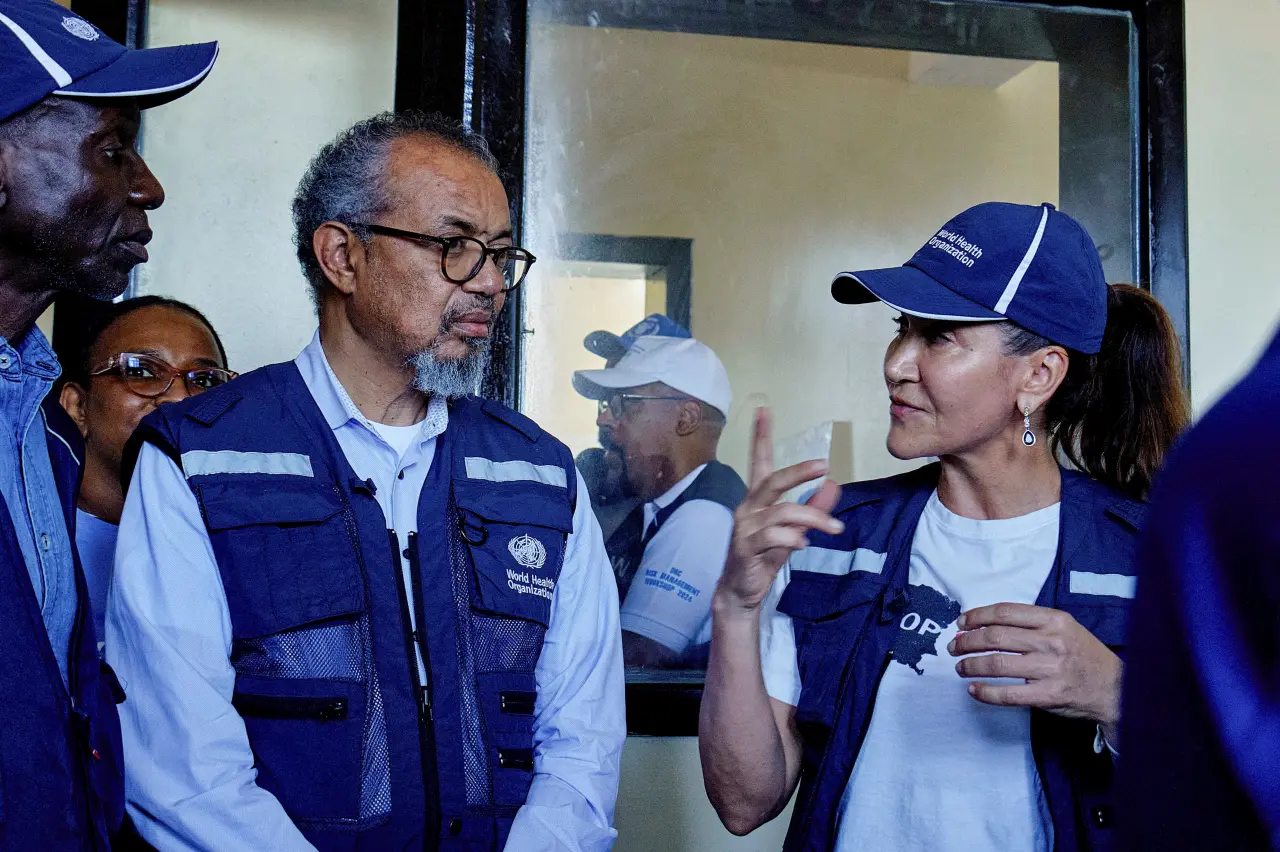
Sources involved in the response to the outbreak also confirmed that some of the deaths recorded in recent days were diagnosed with the disease. The current outbreak was officially declared by Congolese authorities on May 15, although the first deaths associated with the virus occurred before that date. WHO Director-General, Tedros Adhanom Ghebreyesus, meets with health authorities at the Evangelical Medical Center, one of the facilities on the front line of the Ebola outbreak response in Ituri province, Democratic Republic of Congo. Gradel Muyisa Mumbere/Reuters Poor sanitation worsens risk Humanitarian organizations warn that the sanitary conditions in Kigonze could favor the spread of Ebola and other infectious diseases. In the camp, large families live in makeshift tents separated by less than a meter. Residents report that bathrooms are insufficient to serve the population and frequently overflow. The situation is worrying because Ebola is transmitted through direct contact with bodily fluids of infected people, such as blood, vomit, and feces. The scenario is aggravated by the reduction of resources allocated to water, sanitation, and hygiene.
United Nations data show that funding for these areas in the Democratic Republic of Congo fell significantly between 2024 and 2025, dropping to about US$ 38 million — little more than half the value recorded in the previous year. Red Cross workers prepare to bury Vanisa Anifa, a 6-month-old orphan girl who died of Ebola, at the Bigo Cemetery, in Bunia, Congo, Friday, June 19, 2026. AP/Moses Sawasawa This year, only 21% of the US$ 80 million requested by humanitarian agencies for sector actions were effectively funded. According to four organizations working in the region, programs aimed at water supply, construction of bathrooms, and other sanitation measures for displaced populations were reduced or suspended after cuts in international funding. The Ituri province, where Bunia is located, concentrates more than 90% of the approximately 900 confirmed cases of the current Ebola outbreak in the country. Deaths associated with the disease were also recorded in other displaced persons camps in the region. Health authorities are trying to expand testing and contact tracing to contain the transmission of the virus, but face obstacles ranging from resistance from part of the population to the precariousness of the infrastructure in a region marked by mass displacement and years of armed conflict.






Sign in to comment on this article.
No approved comments yet.