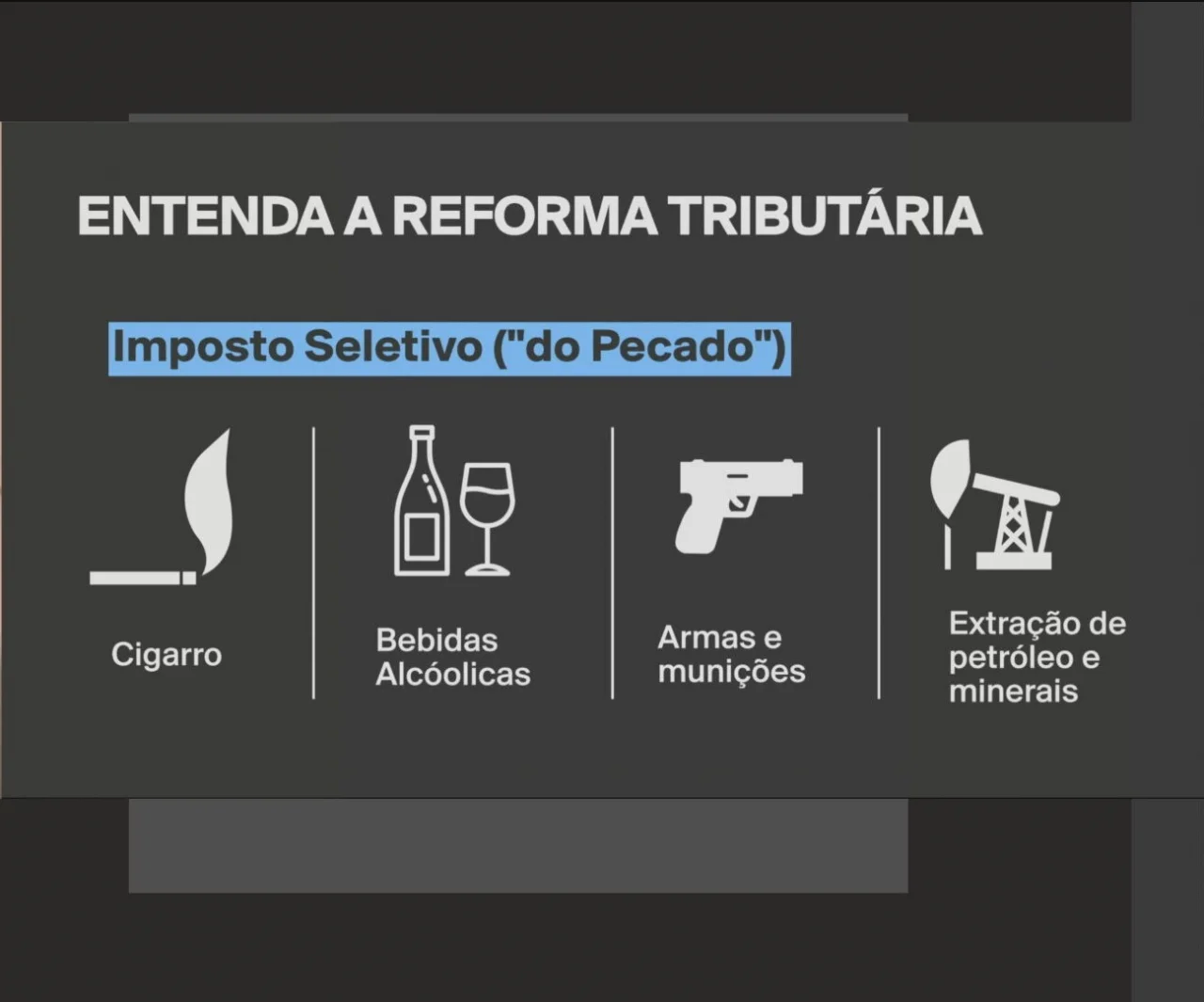
The Minister of Finance, Dario Durigan, stated this Friday (19) that there is no intention to postpone the implementation of the so-called selective tax, known as the "sin tax", scheduled to start in 2027. He anticipated that the idea is to maintain the current tax burden (tax weight) that currently exists, meaning no increase, during a transition process in which debates will be held with the affected sectors. "The idea is to reach an agreement with the affected sectors, maintaining the tax burden they currently have under the IPI, to make the transition, with further detailed debate afterwards.
The proposal must be submitted this year," Durigan said in an interview with Jota. Earlier this month, however, the Ministry of Finance informed g1 that the objective is to make products or activities that harm health or the environment more expensive in the future as a way to reduce their consumption. Now on g1 🔎 The list includes alcoholic beverages, soft drinks, and cigarettes.
The new tax will also apply to certain vehicles, depending on their pollution level, the extraction of mineral goods, and lotteries, sports betting, and "fantasy sports" games, which are online games where participants build virtual teams with real athletes and compete based on the performance of these athletes in real matches. To effectively take effect, the National Congress must approve the tax regulations, but the federal government's proposal has not yet been submitted.
The Executive branch says this will be done by the end of this year. ➡️ A Fiocruz study, cited by the Ministry of Health, states that in 2019, alcohol consumption cost R$ 18.8 billion, of which R$ 1.1 billion related to direct federal costs with hospitalizations and outpatient procedures in the SUS, and R$ 17.7 billion to productivity loss from premature mortality, leaves, and early retirements resulting from diseases associated with alcohol consumption, loss of workdays due to hospital admission, and social security medical leave. ➡️ In Brazil, according to the Ministry of Health, smoking-related diseases generate an indirect cost of R$ 86.3 billion per year, resulting in a total annual expenditure of R$ 153.5 billion for the government, equivalent to 1.6% of GDP. "In contrast, federal tax collection on cigarette sales is only R$ 8 billion per year, which highlights an imbalance between health expenditures and the revenue generated by the commercialization of the product," it says. ➡️ Considering ultra-processed beverages, such as soft drinks, sports drinks, and juices, the government estimated, in a study to support the use of the selective tax, that the costs accounted for by the Unified Health System (SUS) for treating diseases associated with the consumption of these products are estimated at nearly R$ 3 billion per year. ➡️ National producers say that alcoholic beverages, for example, are already heavily taxed in Brazil, with a tax burden ranging from 40% to over 80% of the product's price, and assess that a potential tax increase will pressure profit margins, potentially leading to price pass-throughs, layoffs, and stimulation of the illegal market. Sin tax stamp Reproduction/GloboNews.




Sign in to comment on this article.
No approved comments yet.