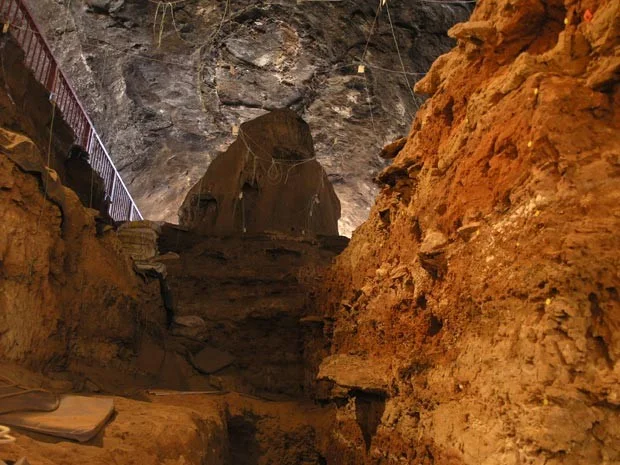
Wonderwerk Cave floor R. Yates/Disclosure Researchers have found new evidence that hominins may have brought fire into the Wonderwerk Cave, in South Africa, between 1.07 million and 1.79 million years ago.
If the interpretation is correct, the finding would extend by hundreds of thousands of years the chronology of one of the oldest known records of fire use associated with human ancestors. The study, published this Monday (1st) in the scientific journal PLOS One, analyzed fossils found in deep layers of the cave and identified repeated signs of combustion in deposits attributed to the beginning of the Acheulean, a period marked by the emergence of the first more elaborate stone tools. The authors argue that the results indicate recurring episodes of burning associated with the presence of hominins, probably representatives of Homo erectus. However, experts who did not participate in the research state that there is still a lack of direct evidence to confirm that the fires were caused or controlled by human ancestors. ❓Hominins vs. hominids - Scientists use the term hominins to designate human beings and their closest evolutionary ancestors.
Hominids, on the other hand, is a broader category that also includes chimpanzees, gorillas, and orangutans. Now on g1 What changes in relation to what was already known? Wonderwerk Cave already occupied a central place in research on the origin of fire use. 🔥 Mastery of fire - Despite the importance of fire for human evolution, there is still no consensus on when human ancestors began to use it regularly. Most researchers agree that robust evidence of recurring fire use appears about 1 million years ago, including findings in the Wonderwerk Cave itself, in South Africa.
The ability to produce fire deliberately — and not just take advantage of flames originating from natural fires — probably emerged much later and remains one of the most debated topics in paleoanthropology. In 2012, another study found in the so-called Stratum 10 of the Wonderwerk Cave, dated to about 1 million years ago, a set considered robust evidence of fire: burnt bones, stone tools altered by heat, burnt sediments, and ashes preserved at the site. The new research identified signs of combustion also in Stratum 11, an older layer, dated between 1.79 million and 1.07 million years ago. According to the authors, this suggests that hominins were already using fire in the cave much earlier than the most accepted evidence indicated until now. One of the team's main arguments is the location of the burnt materials. The fossils were found in areas that were about 30 meters inside the cave when they were deposited, which reduces the probability that natural fires reached the site by chance. In addition, signs of combustion appear in different archaeological layers, separated by tens of thousands of years, which suggests repeated episodes of fire. How the researchers reached this conclusion One of the challenges of studies on fire in prehistory is to distinguish materials that were actually burnt from fossils altered by natural processes over time. Traditionally, researchers observe color changes in bones and sediments.
The problem is that mineral deposits can darken fossils and mimic the effects of carbonization, while subsequent chemical changes can produce light tones similar to those observed in materials subjected to high temperatures. To circumvent this limitation, the team developed a method based on bone luminescence. The researchers illuminated the fossils with blue light and observed them through special filters. Burnt bones emitted a characteristic reddish luminescence, while unburnt ones did not show the same response. The results were compared with analyses by Fourier-transform infrared spectroscopy (FTIR), one of the techniques most used to identify thermal alterations in archaeological materials.
According to the authors, there was strong agreement between the two methods. The technique was also tested on fossils from an archaeological site in Spain and on modern bones burnt experimentally. Experts see methodological progress, but call for caution For Juan Manuel Jiménez Arenas, a researcher at the University of Granada who did not participate in the study, the main contribution of the work is precisely the new methodology. According to him, the protocol based on luminescence represents an important advance for identifying burnt bones in very old archaeological contexts. "The methodological impact of the article is unquestionable," he said. On the other hand, Arenas considers that there are still doubts about the origin of the fires identified in the cave. In the researcher's assessment, the results show that there was fire at the site, but they do not directly demonstrate that hominins were responsible for its production or use. He notes that the hypothesis presented by the authors is that human ancestors would have brought into the cave fire obtained from natural fires that occurred in the external environment. "For such an important change in the interpretation of prehistory, more compelling direct evidence would be desirable," he assessed. A similar assessment was made by Aitor Burguet-Coca, a researcher at the Catalan Institute of Human Paleoecology and Social Evolution (IPHES-CERCA), specialized in fire archaeology. According to him, the study offers a relevant hypothesis for understanding the first opportunistic uses of fire, but indirect evidence like this usually generates debate in the scientific community. "It will be necessary to wait for new results that allow identifying this use of fire through more direct approaches," he said. Fire, but not necessarily cooking The authors highlight that fire played a central role in human evolution by providing heat, protection against predators, and extending the time available for activities after sunset. Throughout evolution, the mastery of fire was also associated with cooking food, increasing the energy efficiency of the diet, and, possibly, brain development. However, the researchers emphasize that the Wonderwerk Cave does not show evidence of cooking. The interpretation proposed by the study is more modest: that early Acheulean hominins may have transported fire obtained from natural fires into the cave and used it on a recurring basis. If confirmed by future research, the discovery would help bring the origin of fire use closer to another important milestone in human evolution: the emergence of the first Acheulean technologies, associated with Homo erectus.






Sign in to comment on this article.
No approved comments yet.