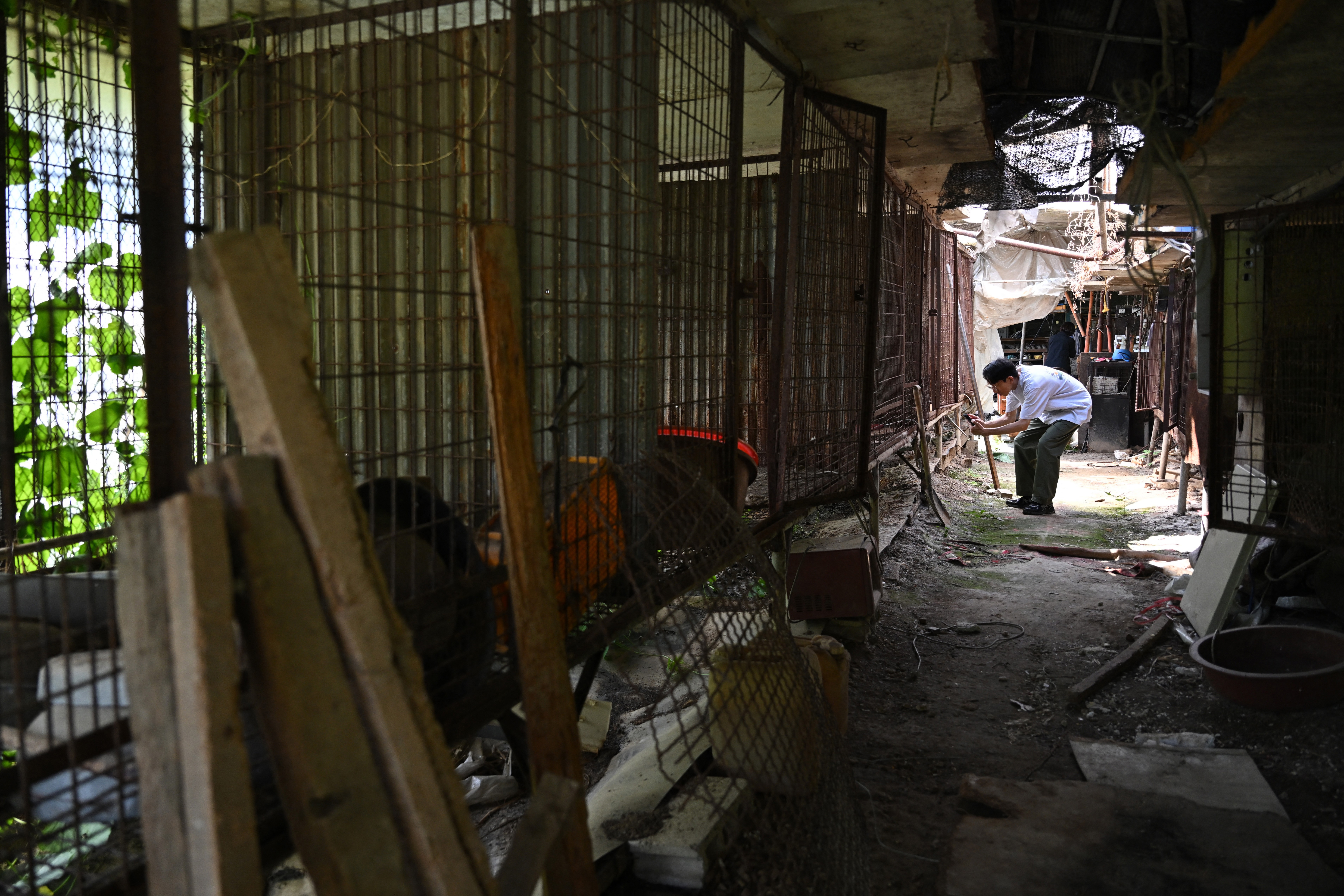
Animal rights activist inspecting empty cages at an abandoned former dog slaughterhouse in Pyeongtaek
JUNG YEON-JE / AFP
Electric shock batons leaning against a wall next to rusted cages set the scene of an abandoned dog slaughterhouse in a South Korean city.
The location in Pyeongtaek, south of Seoul, offers a snapshot of an industry on the verge of disappearing, with the country's dog meat ban taking effect next year.
It also raises a question: what happened to the hundreds of thousands of dogs bred for human consumption?
Dog meat, popular among older people and in rural areas, has lost ground among young South Koreans, who view dogs as pets.
In January 2024, the country passed a law banning the breeding, slaughter, and sale of dogs for meat. When it takes effect in February 2027, violators could face up to three years in prison.
Now on g1
As the ban approaches, the industry is disappearing rapidly. Government data indicates that in 2024, between 400,000 and 450,000 dogs were raised for meat. The Ministry of Agriculture estimates that only 20,000 remain.
To help farmers with the transition, the government offered up to 600,000 won ($390, R$ 2,000) for each culled dog. So far, however, the destination of these animals has not been tracked.
"Our role is to verify that the dogs are not on the farms or in the slaughterhouses before handing out compensation. We do not get involved in what happens to the dogs," a ministry inspector told AFP on condition of anonymity.
"They've already been eaten"
Animal rights activist playing with dogs rescued from slaughterhouses at a shelter run by the animal rights group 'KARA' in Paju
JUNG YEON-JE / AFP
Data obtained by a lawmaker indicate that by February, only 623 dogs had been adopted and fewer than 500 were sent to shelters.
Animal welfare groups and former breeders believe the rest may have been slaughtered.
"If many rescued dogs had entered adoption programs, animal advocacy groups like ours would know," said Kim Young-hwan of the CARE organization.
In over two decades, CARE says it has rescued and put up for adoption around 2,500 dogs from breeding facilities, most of them sent abroad.
Dogs bred for meat are large, while South Koreans usually prefer small dogs as apartment pets.
"In South Korea, for a long time there was a differentiation between dogs raised for meat and pets," former breeder Ju Yeong-bong told AFP.
Asked about the whereabouts of thousands of dogs, he acknowledged that perhaps "they've already been eaten."
Legal contradiction
Animal skulls under an empty cage at an abandoned former dog slaughterhouse in Pyeongtaek.
JUNG YEON-JE / AFP
According to the Ministry of Agriculture, 1,265 dog farms — 82% of the total — announced their closure by the end of May.
Ju, who is also a Christian pastor, opened his farm in 1994 after concluding he could not make a living solely from his ministry.
"I think the dog meat ban is a betrayal. It was imposed for political reasons, without sufficient dialogue or measures to protect our livelihoods," he told AFP.
For activists, the legal change also closes a loophole regarding the treatment of dogs, said lawyer Park Joo-yeon, head of the PNR group.
Unlike cattle or pigs, dogs were never classified as livestock in South Korea. This means the industry operated for decades without rules on breeding and humane slaughter.
At the Pyeongtaek site, AFP journalists saw abandoned tools apparently used to electrocute dogs.
The KARA organization rescued 29 dogs in May from the Pyeongtaek farm and denounced its owner for animal cruelty, a practice banned in the country.
Dogs disappear ahead of dog meat ban in South Korea
Animal rights activist inspecting empty cages at an abandoned former dog slaughterhouse in Pyeongtaek JUNG YEON-JE / AFP Electric shock batons leaning against a wall next to rusted cages set the scene for a ...






Sign in to comment on this article.
No approved comments yet.