UK Prime Minister resigns After resisting and insisting he would remain in office until the end, UK Prime Minister Keir Starmer announced this Monday (22) that he will resign. A replacement, also from the Labour Party, Starmer's party, is expected to take office by September. With this, Starmer's government, a former lawyer and traditional Labourite, lasted less than two years, even though he was elected with a rare majority in Parliament and a landslide victory at the polls over his Conservative rivals. Why, then, did his government collapse? In the 2024 UK elections, the Labour Party, center-left and then led by Keir Starmer, won more than 410 seats in the British Parliament, easily exceeding the minimum required to secure a majority in the House. 👉 In the UK, voters vote for parties, and the one that gets the most votes gains control of Parliament and nominates a name, usually the party leader, to be the country's prime minister. The 2024 result was surprising and rare in the recent history of parliamentary regimes in Europe, where, in most cases, winning parties do not reach the majority required to govern and have had to seek alliances with other parties to form a government. That was not the case for Starmer.
His "clean" victory — that is, without the need to forge pacts — was understood as a sign of a return to stability in the troubled political landscape of the UK, which until then had recorded five prime ministers in the last ten years. Gradually, however, credibility and confidence in the Starmer government fell, and he became the prime minister with the worst approval rating in the UK in 50 years, due to a series of factors. Among them: The UK economy remained stagnant throughout his government, despite the Labour prime minister's promises to boost it.
His government also cut subsidies for the elderly and raised taxes; In the very first months of his administration, the British press reported that Starmer and several of his ministers accepted gifts from Labour Party donors such as designer clothes, luxury glasses, and tickets to concerts, including one by singer Taylor Swift, and football matches. Although the donations were declared and were within parliamentary rules, the revelation caused wear and tear on Starmer's austere image; In February 2026, his chief of staff resigned for having nominated Peter Mandelson as ambassador to the US, even knowing of Mandelson's ties to Jeffrey Epstein.
The case also shook the credibility of the Labour Party, and Starmer himself acknowledged he had made a mistake; Dissatisfaction with the economy and image crises took its toll at the polls in the regional elections in May. In the election, the Labour Party suffered a historic defeat, losing hundreds of seats in local Parliaments. The prime minister's popularity plummeted due to all the episodes.
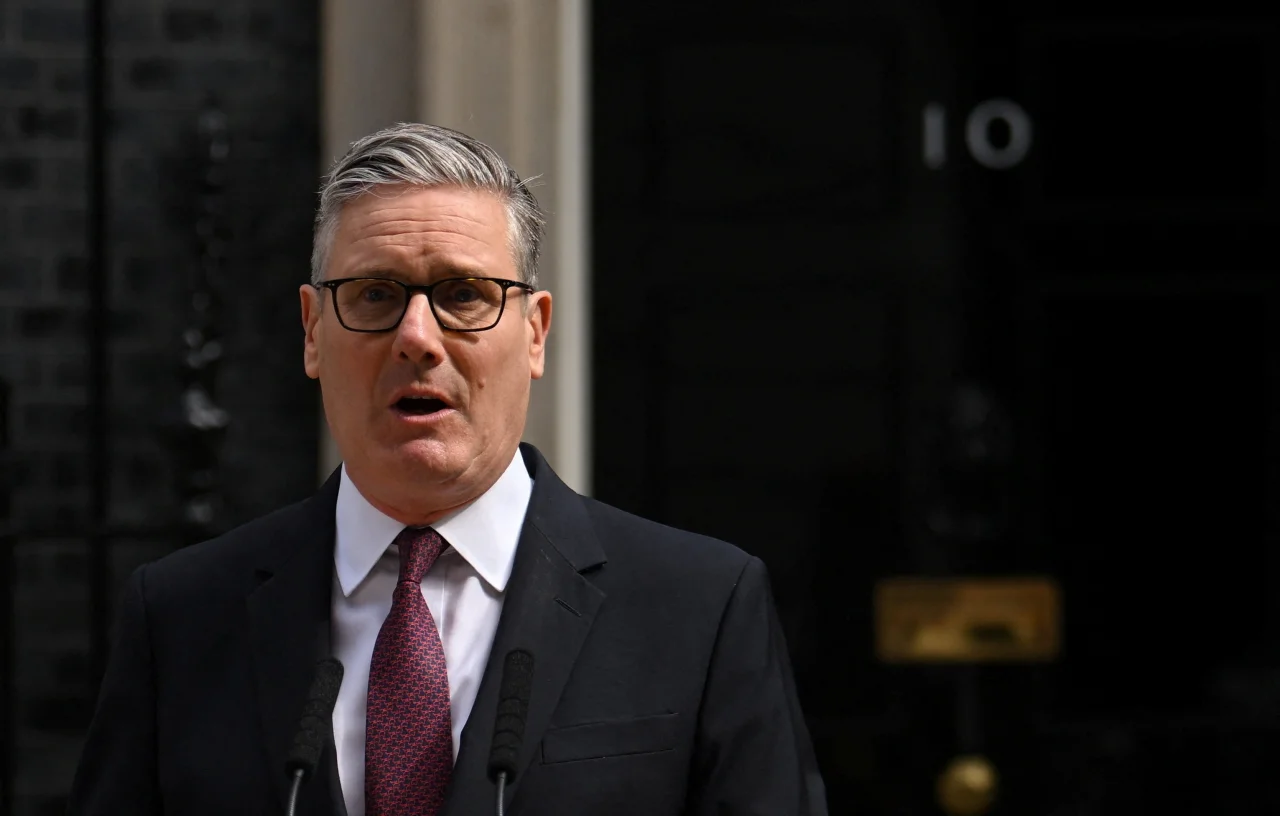
In May, only 13% of Britons approved of his government, while 79% rejected his leadership, the worst index since 1977. Last month, Starmer was pressured by about 100 parliamentarians from his own party who publicly demanded his departure. The prime minister managed to hold on for weeks, but ended up not resisting the pressure: he resigned after only 23 months in office. 'Smooth transition of power' June 22, 2026: British Prime Minister Keir Starmer speaks in front of 10 Downing Street after Andy Burnham's decisive victory in the Makerfield by-election last week. REUTERS/Jaimi Joy In the speech in which he announced his resignation this Monday morning, Starmer said he spoke with King Charles and that he wants a smooth transition of power. He also stated that nominations for his replacement should begin on July 9. "I will remain in office until the end of the contest and will do everything in my power to ensure an orderly transition of power.
I will give my full support to my successor," he declared. On Saturday (20), the English newspaper "The Observer" had already anticipated that Starmer would resign after reaching the conclusion that his position is no longer sustainable after talking to cabinet ministers, advisors, donors, and union leaders. With Starmer's departure from power, the UK will have its seventh head of government in ten years. The prime minister also informed the press that he will ask the party's national executive committee to establish a schedule for choosing a new leader. The Labour leader said he will give full support to the party, which will now “inherit a stronger and fairer Britain than the one I inherited two years ago”. In a farewell tone, he thanked colleagues, friends, and public servants, and stated that he intends to dedicate more time to his family: “I want to be the best husband possible to my fantastic wife and the best father to my beautiful children, who are my pride.
The question my party is asking now is whether I am the best person to lead us into the next general election. I have heard the answer from my parliamentary party and I accept it with humility.” Growing pressure Pressure against Starmer had been increasing for months and intensified even more this week, after Andy Burnham, Starmer's main Labour rival, won a seat in the British Parliament on Thursday (19), paving the way for a challenge to the pressured prime minister's leadership. The victory reignited hope among Labour parliamentarians that Burnham, known for his communication skills, could revitalize the party, which lost support under Starmer's leadership. How will the successor be chosen? Any candidate wishing to replace Starmer would need to secure the support of 20% of Labour members of parliament.
As the Labour Party currently holds 403 seats, this is equivalent to 81 parliamentarians, including the challenger. Candidates must also reach certain levels of support from the Labour Party's grassroots organizations and affiliated organizations, such as unions. If only one candidate reaches the necessary support threshold, there is no vote: the candidate is elected unopposed as leader of the Labour Party and becomes prime minister. If there is more than one qualified candidate, the winner will be decided by a vote of all Labour Party members and affiliates.






Sign in to comment on this article.
No approved comments yet.