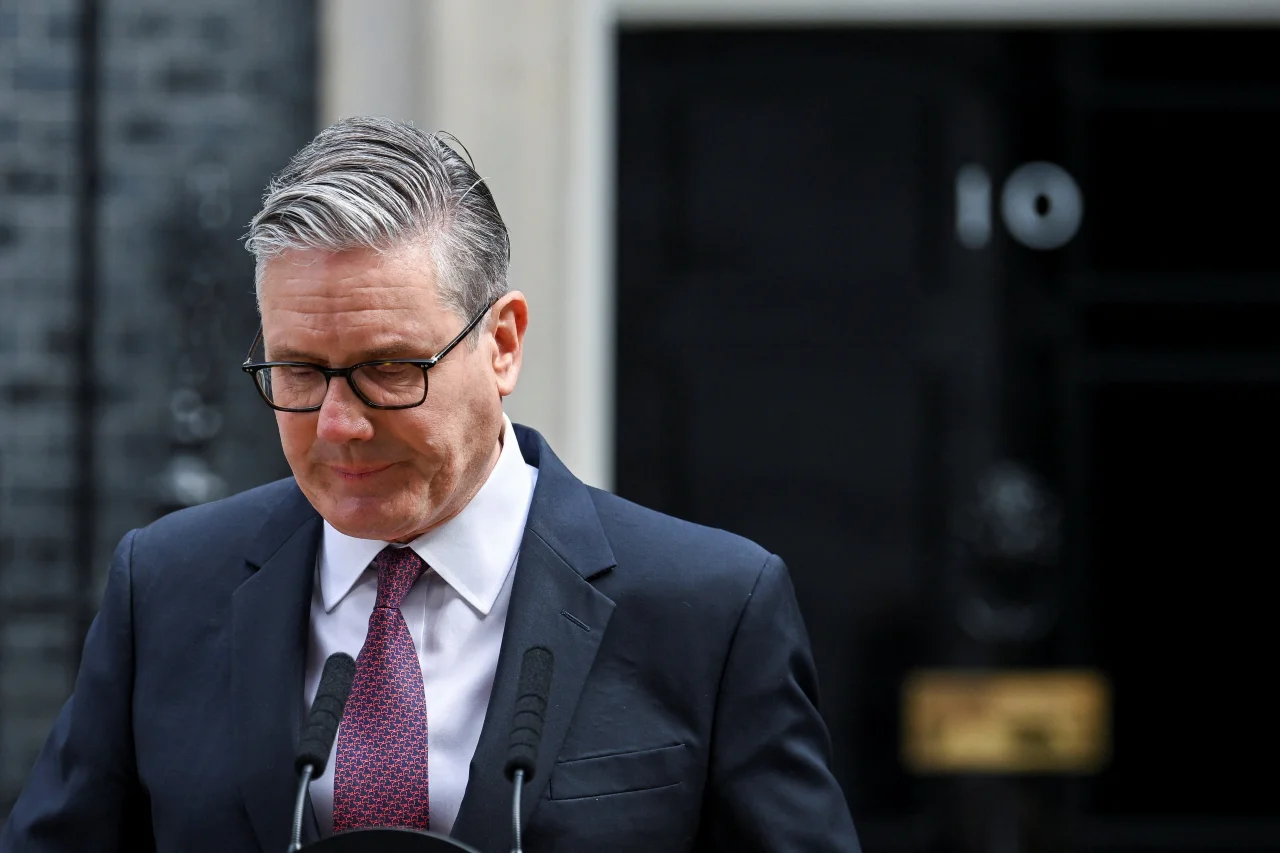
UK Prime Minister resigns UK Prime Minister Keir Starmer announced this Monday (22) that he will resign from office, and a new leader is expected to take over by the return of the British Parliament from recess in September. 📱Favorite g1 on Google and follow the top news of the day Starmer said he spoke with King Charles this morning and that he wants a smooth transition of power. He also stated that nominations for his replacement should begin on July 9. "I will remain in office until the contest concludes and I will do everything in my power to ensure an orderly transition of power.
I will give my full support to my successor," he declared. British Prime Minister Keir Starmer had been facing pressure to step down as leader of the Labour Party for months. 🔎 The UK does not elect its prime minister directly. They are chosen by the MPs of the party that won the general election (the one that gathered the most seats), which is currently the Labour Party.
The post generally goes to the party leader, currently occupied by Starmer. (understand more below) READ ALSO: Andy Burnham, frontrunner to replace Starmer, announces he will run for prime minister British Prime Minister Keir Starmer reacts as he announces his resignation timetable outside 10 Downing Street in London REUTERS/Jaimi Joy Starmer also communicated to the press that he will ask the party's national executive committee to establish a timetable for choosing a new leader. On Saturday (20), the English newspaper "The Observer" had already reported that the premier would resign after concluding that his position was no longer sustainable following talks with cabinet ministers, advisors, donors, and trade union leaders. With Starmer's departure from power, the UK will have its seventh head of government in ten years. The Labour leader said he will give his full support to the party, which now “will inherit a stronger and fairer Britain than the one I inherited two years ago.”
In a farewell tone, he thanked colleagues, friends, and civil servants, and stated that he intends to dedicate more time to his family: “I want to be the best husband possible to my fantastic wife and the best father to my beautiful children, who are my pride. The question my party is asking now is whether I am the best person to lead us into the next general election.
I have heard the answer from my parliamentary party and I accept it with humility.” READ ALSO: Who could replace Keir Starmer as UK prime minister June 22, 2026: British Prime Minister Keir Starmer speaks outside 10 Downing Street following Andy Burnham's decisive victory in the Makerfield by-election last week. REUTERS/Jaimi Joy Growing pressure The pressure against Starmer had been mounting for months and intensified further this week after Andy Burnham, Starmer's main Labour rival, won a seat in the British Parliament on Thursday (19), paving the way for a challenge to the embattled prime minister's leadership. Victory rekindled hope among Labour lawmakers that Burnham, known for his communication skills, can revitalize the party, which lost support under Starmer's leadership. On May 18, Starmer went so far as to state that his time as leader of the country was not over and that he would not step down. How will the successor be chosen? Any candidate wishing to replace Starmer would need to secure the support of 20% of Labour members of Parliament. As the Labour Party currently holds 403 seats, this equals 81 MPs, including the challenger. Candidates must also reach certain levels of support from Labour Party grassroots organizations and affiliated organizations, such as trade unions. If only one candidate reaches the required support threshold, there is no vote: the candidate is elected unopposed as leader of the Labour Party and becomes prime minister. If there is more than one qualified candidate, the winner will be decided by a vote of all Labour Party members and affiliates.






Sign in to comment on this article.
No approved comments yet.