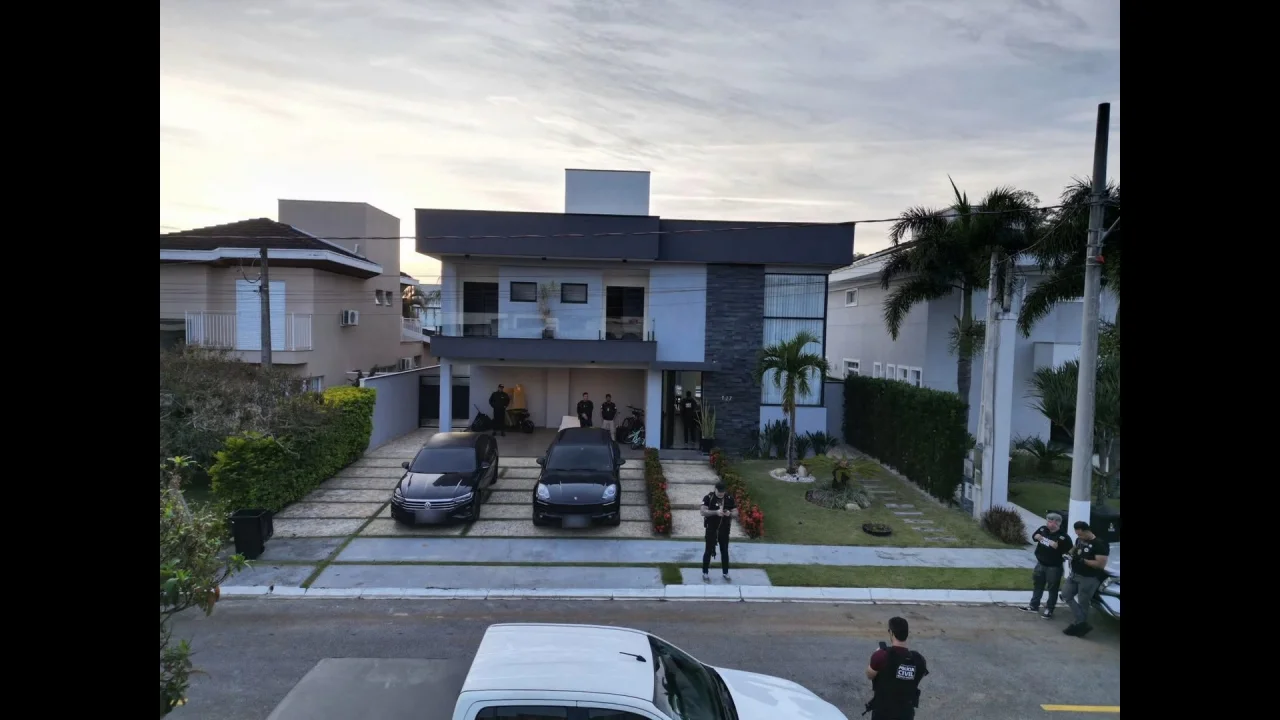
House in a high-end gated community in the interior of São Paulo was the target of an operation investigating vehicle fraud PCMG/Divulgação The Civil Police of Minas Gerais presented, this Friday (19), the results of the second phase of Operation Alienatio Ficta, which, according to the institution, investigates one of the largest vehicle fraud schemes ever identified in the state and the country. The total loss could reach R$ 300 million.
According to delegate Filype Utsch, a criminal organization is suspected of acting by defrauding financing and insurance for more than two thousand vehicles, including cars that were still in manufacturer yards and had not even been registered (understand more below). Among the victims are manufacturers, dealerships, financial institutions, and individuals.
✅ Click here to follow the g1 Minas channel on WhatsApp "This was a second phase of the operation that we titled Alienatio Ficta, which is an investigation aimed at taking down a criminal organization that was defrauding the financial system," stated the delegate. In this phase of the operation, police executed arrest warrants and search and seizure warrants in different states. Five people were arrested in Taubaté (SP), Pindamonhangaba (SP), Divinópolis (MG), Foz do Iguaçu (PR), and in a city in Paraíba.
The police also conducted inquiries in Rio de Janeiro to identify other involved parties. In total, nine suspects have already been detained since the start of the investigations in October of 2025. Now on g1 How the scheme worked The scheme began from a manufacturer, with about 500 vehicles, and expanded to thousands of cars across the country.
Among the victims are manufacturers, dealerships, financial institutions, and also individuals. According to the investigations, the fraud worked as follows: The criminals cloned vehicle data to simulate their purchase with the help of dealership and agency employees, who requested financing from banks. In some cases, the automobiles were not even in circulation or were still in stock at the manufacturers. The criminals also relied on data manipulation in inspection companies, which validated false information used by banks to release financing and give an appearance of legality to the registration of the cloned vehicles. Subsequently, the information on the automobiles was entered into the Detrans systems for the issuance of property transfer documents.
The gang then received the financing amount for the vehicles. The suspects also collected information about automobiles on the streets to carry out the scams.
"Through the seized cell phones, we obtained images where they spent part of the day taking photos of vehicle license plates," explained delegate Filype Utsch. According to the police, the group also insured the vehicles and then registered false thefts to receive indemnifications. "We now have a third phase, where we are looking for the banking link and [...] also people linked to public service," the delegate completed. Million-dollar loss The police are still calculating the total loss, but estimate that the scheme may have moved between R$ 100 million and R$ 300 million since 2024. The investigations have already identified more than two thousand vehicles related to the frauds. So far, approximately R$ 300 thousand have been blocked in accounts and approximately R$ 5 million in luxury cars, such as Porsche Macan, Mercedes-Benz, and Dodge Ram, have been seized.
According to the Civil Police, the investigated individuals led a high-standard lifestyle with the money from the frauds. One of the search and seizure targets was a house in a gated community in the interior of São Paulo.






Sign in to comment on this article.
No approved comments yet.