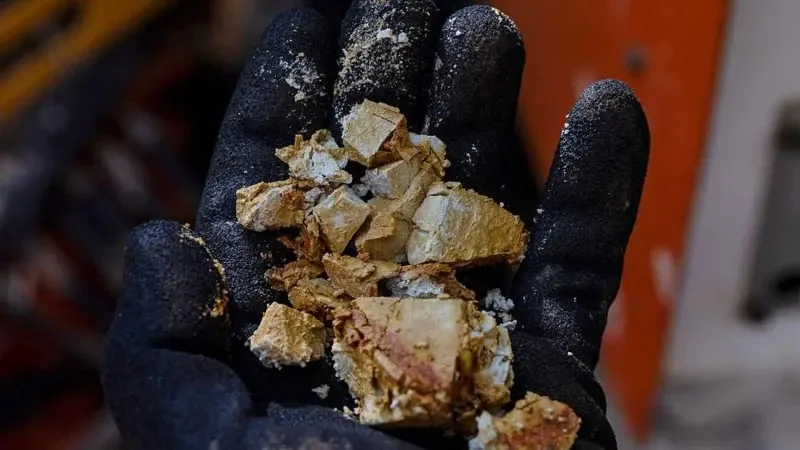
Brazil has the largest rare earth reserves in the world after China Getty Images A survey by the National Mining Agency (ANM) indicates that since 2023, Brazil has registered significant growth in requests for rare earth research authorization. 🔎 Known as "rare earths," these minerals make up a group of 17 chemical elements found in nature, usually mixed with other ores that are difficult to extract and have high commercial value. Unknown to the general public, but coveted behind the scenes of industry and diplomacy, "rare earths" have become one of the most strategic resources on the planet. They are essential for manufacturing wind turbines, electric car batteries, transmission cables, rockets, medical equipment, weapons, and cutting-edge electronic devices. With a central role in the energy transition, defense, and high-tech production, these resources are at the center of geopolitical disputes and negotiations, and Brazil has a privileged potential to stand out on the scene. Now on g1 The numbers demonstrate the increase in interest in rare earths in recent years—especially starting in 2023—a reflection of the perception of their growing strategic relevance.
Between 2023 and the beginning of June, around 3,000 requests were recorded. For comparison, 745 applications were recorded in the entire period between 1975 and 2022. The research application is the first phase of a long period until the mining concession is granted, when a company receives authorization to explore a deposit.
Rare earths: types and uses Art/g1 Budget freeze Despite the potential, activities related to rare earths could be hit by a R$ 22.7 million freeze in the National Mining Agency's (ANM) budget. The warning was given by the agency's CEO, Mauro Sousa. 🔎 A budget freeze is like a temporary "emergency brake" on government finances.
It happens when mandatory expenses, such as retirement payments, rise higher than expected. When this happens, the government needs to withhold part of the money from non-essential expenses, such as construction works, so as not to exceed the allowed spending limit. According to Sousa, the budget restriction will require the agency to review priorities in an already resource-scarce scenario.
ANM CEO, Mauro Sousa Disclosure/ANM "This means allocating resources in the best possible way. Not all activities will be carried out in the necessary and appropriate time," he told journalists after an event by the Brazilian Mining Institute (Ibram) this week.
The sector responsible for critical and strategic minerals already operates with a "modest" structure. According to Sousa, the unit has four civil servants, who manage studies and actions related to the theme. The budget limitation comes at a time when Brazil is seeking to expand its participation in the global supply chain for these minerals.
The ANM director mentions that the country has signed cooperation agreements and memoranda of understanding with other countries to accelerate studies and investments in the sector. "We have created international commitments and we need to have an institutional structure capable of providing adequate responses. When this happens, we lose the capacity to fulfill what the Brazilian State is committing to," he said. Brazilian Geological Survey advances research on rare earth potential Disclosure/SGB For the ANM CEO, there is a contradiction between the country's strategic objectives and the reduction of resources allocated to the agency.
"We fail when we cut resources that do not allow what was agreed upon to be effectively fulfilled. This is a contradiction of the Brazilian State," he assessed.
Other areas In addition to actions aimed at strategic minerals, the freeze could affect issues such as area auctions for exploration and dam inspection actions. If the resource limitation is maintained, 43 dams and 18 mining waste piles that were scheduled to receive technical inspections by the end of the year may be left off the initially planned schedule. 🔎 These inspections support regulatory decisions, inspection actions, and operational safety assessments.
Some of the structures scheduled for inspection require continuous monitoring due to their potential social, environmental, and economic impact, including facilities located near communities and environmentally sensitive areas. The resource restriction also affects stages considered essential for the analysis of mining processes. In many cases, field inspections are necessary for the approval of Final Research Reports and Economic Exploitation Plans (PAEs), documents that detail how a deposit will be commercially exploited. Without these on-site verifications, the processing of applications tends to slow down, which can delay investments and the entry of new ventures into operation.





Sign in to comment on this article.
No approved comments yet.