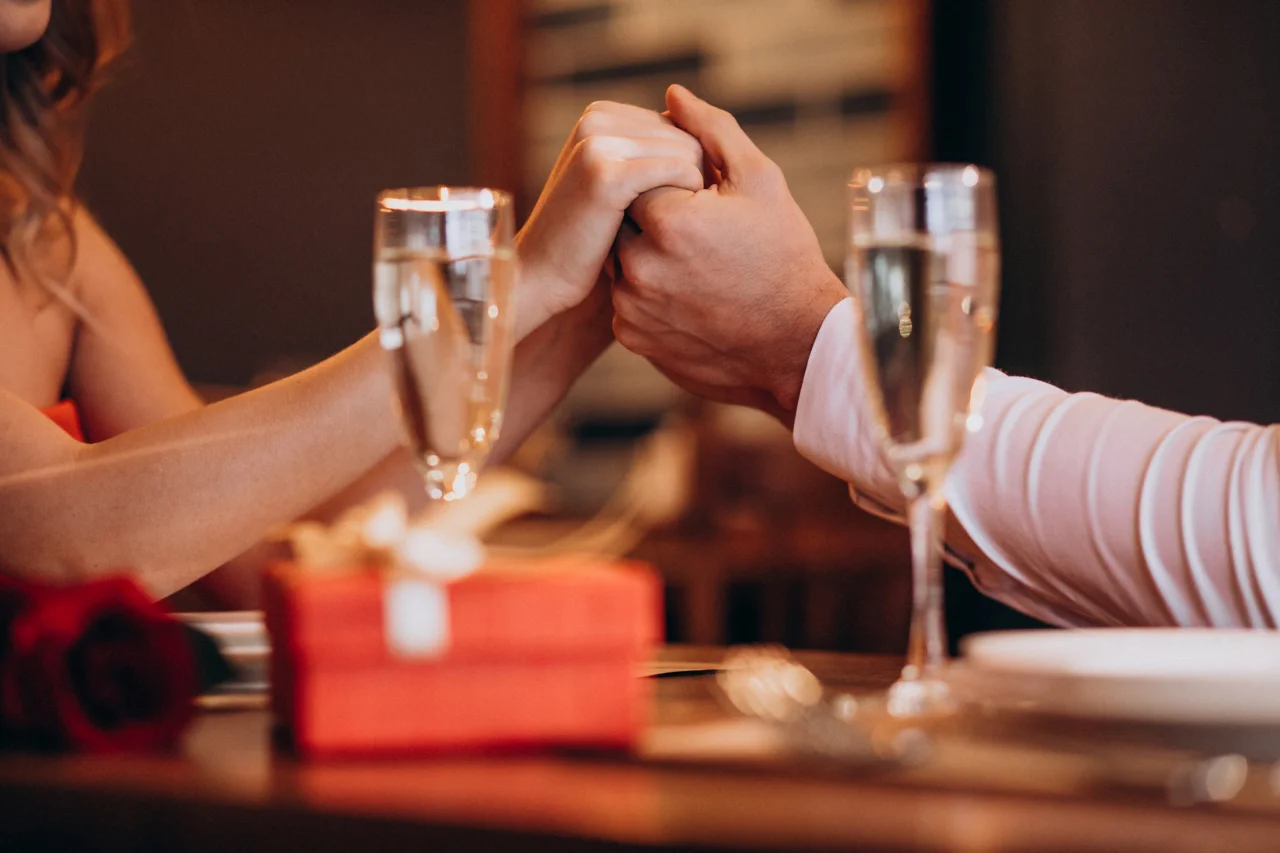
Passion leaves people in a constant state of excitement and alertness Freepik Have you ever felt those butterflies in your stomach just from thinking about your loved one? The famous “butterflies in the stomach” — an expression that has become a cliché in love stories — have a scientific explanation: they are, in fact, the side effect of a storm of hormones released in the body when we are in love. Dopamine, norepinephrine, and cortisol come into play, causing a state of alertness that mixes pleasure, anxiety, and even physical symptoms like a racing heart and sweaty palms. 🧠 The largest study on how passion acts on the brain, produced by anthropologist Helen Fisher in 2005, analyzed the brains of individuals in love and discovered that they undergo changes similar to those caused by psychiatric disorders. ♥️ Being in love, according to a review of the study done years later by Harvard researchers Richard Schwartz and Jacqueline Olds, exaggeratedly increases the levels of cortisol in the body, the hormone responsible for stress.
Not enough, they drop the levels of serotonin, which is the hormone of well-being and calmness. 🦋 “Being in love is like skydiving,” says doctor specializing in psychosomatic medicine Rubens Cascapera to g1.
Those butterflies in the stomach, portrayed in romantic movies, are nothing more than the combination of hormones responsible for the feeling of passion: dopamine, norepinephrine, and cortisol. The increase in the levels of these hormones generates a mix of feelings, which involve excitement, pleasure, motivation, and euphoria.
But all of this comes accompanied by high levels of stress due to the anguish of not knowing what is to come. "Everything is new when you are in love," says psychoanalyst and writer Christian Dunker. He emphasizes that passion is an explosion of expectations that flood the mind of the person feeling it.
“In the state of being in love, the person lives a kind of indeterminacy about the other. They lose control,” he says. Addictive drug Records indicate that, during the Middle Ages, passion was considered a disease due to the way it threw its “victims” off balance.
Cascapera explains that passion activates an area of the brain called the nucleus accumbens, responsible for the sensation of pleasure. The feeling also interferes with the amygdalae, where emotions are concentrated.
“When you are in love, these areas become unregulated,” says the doctor. 🫨 The person in love, then, starts to have confused feelings, which vary from anguish to excitement, from motivation to fear, and all of this generates stimuli for the body. That is why hands sweat and the heart races.
“It is a great uncertainty that generates fear and unbalances our mind,” he explains. Released to exhaustion during passion, dopamine is the hormone of addictions.
In the process of falling in love, says the expert, the person becomes addicted to the feeling. “It is what explains the so-called blindness of passion, where the person cannot actually see who the being they are in love with is.
They turn into a pile of expectations,” says the doctor. “When it ends, we think: ‘How did I fall in love with that?’.
It is the blindness, the body becomes totally directed by the emotional and reason is left way down. That is why the decision to marry someone should only be made after passion gives way to love.” The transition to love “When passion starts to be spoken, put into words, experiences, encounters, and journeys, it becomes what we call love,” says psychoanalyst Christian Dunker. 🌊 Chemistry professor at the Professor Ferretto platform, Michel Arthaud details this metamorphosis of the feeling, which usually happens between six months and two years of a relationship.
“It is as if we left the storm and entered calmer waters,” he says. “Passion begins to give way to love, where dopamine and cortisol drop and what stands out is oxytocin and serotonin,” he states. Serotonin is the hormone of tranquility and peace.
Oxytocin is what is responsible, within physiology, for the creation of bonds – it is this hormone that the mother releases when she breastfeeds the baby. When these hormones begin to prevail in relation to those that guide passion, it loses strength, and the bond of love emerges.
“True full health is in love, not in passion,” says Cascapera. “It is just a path to reach the process of love.” For Dunker, the transition can be an experience of disappointment and loss.
It is normal, he says, for the end of passion to transform “the statue you sculpted with your fantasies into a real person, with imperfections and problems”.
“In the end, that is what passion wants: to turn into real love.” And why do we like passion so much? “When love appears, you trade the hero of the stars, from another world, for a hero of this world – who takes the bus, goes to work, shares stories and achievements. For many, this trade is unfair, so unfair that these people want to go back to the previous chapter.
And they keep seeking passions incessantly,” says Dunker. Those who cannot migrate to love and remain trapped in cycles of passion, explains the doctor specializing in psychosomatic medicine Rubens Cascapera, live in chemical dependence on dopamine. “It is like a drug,” he details.
Dunker explains that passion makes the human being project onto the other their most potent ideals, building this object of passion through their own fantasy. And this fantasy is always double, at the same time that the prince exists, he can be the big bad wolf.
“You throw yourself at the feet of the other and, a minute later, you suffer because you imagine that you will lose them.
But we desire this because it mobilizes such a radical set of transformations in ourselves that we become addicted. We want to live it again and again.” Tips for Valentine's Day.




Sign in to comment on this article.
No approved comments yet.