United Kingdom Prime Minister, Keir Starmer, announces he will resign The United Kingdom Prime Minister, Keir Starmer, announced his departure from office this Monday (22) and opened space for a new contest for the leadership of the British parliament. Starmer stated that he is expected to remain in office until a successor is defined. ✅ Follow g1's international news channel on WhatsApp The current premier stated that he will ask the organizing committee of the Labour Party, of which he is the current leader, to initiate the succession process. Applications to contest the position should open in 9 of July and run until 16. The favorite to replace Starmer is Andy Burnham, former mayor of Manchester. He belongs to the more leftist wing of the Party and became a member of parliament last week. Burnham received support from the country's former Health Minister, Wes Streeting, who resigned from the position in May.
Streeting was pointed out as one of the main names to run for the party presidency. With the support of his fellow party member, Burnham is expected to be the sole candidate in the contest. If there are no competitors, the new premier is expected to take office in 1° of September.
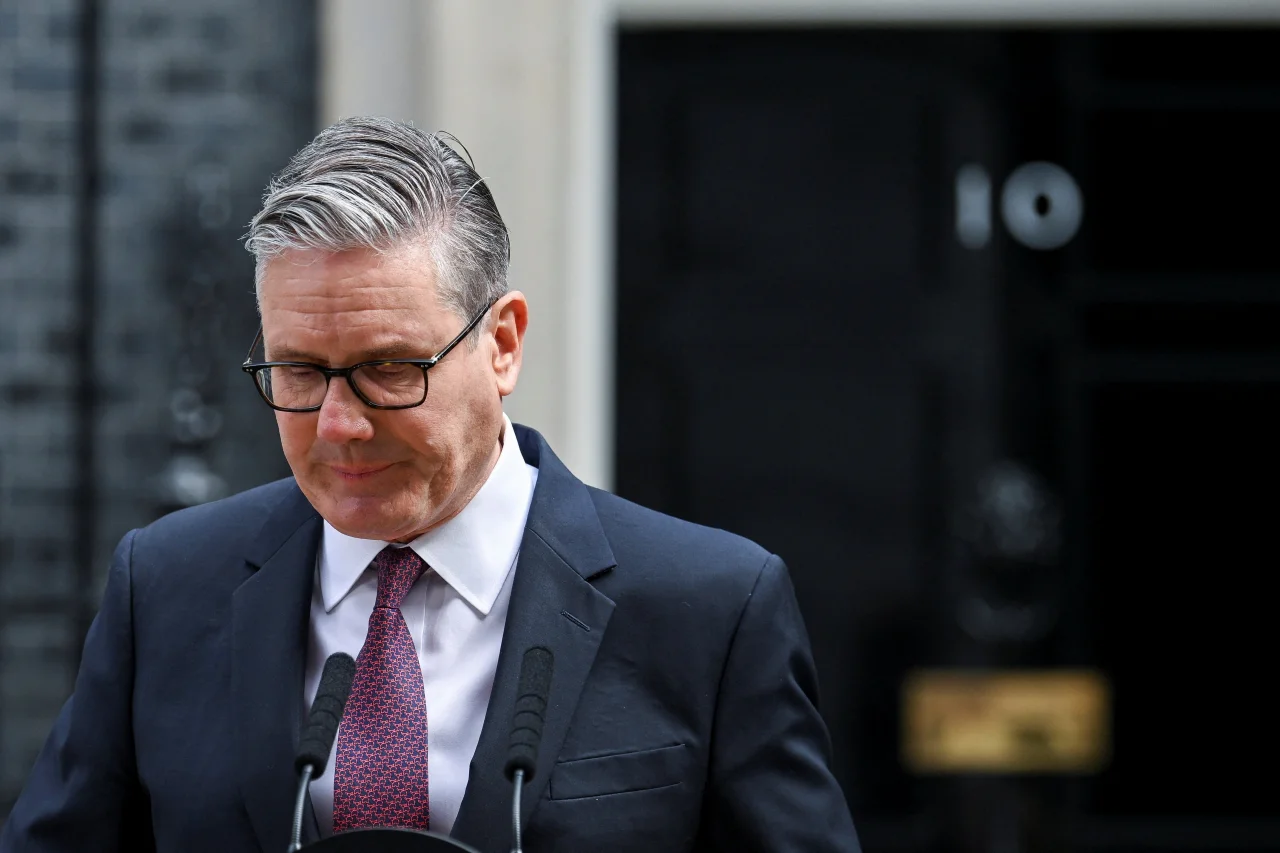
Despite the expectation of a smooth transition, the change is not without risks. If other candidates decide to enter the competition, the party could enter an internal crisis that could paralyze the government (read more below). The British Prime Minister, Keir Starmer, reacts while announcing the schedule of his resignation, in front of number 10 of Downing Street, in London REUTERS/Jaimi Joy How is a prime minister elected in the United Kingdom? The most well-known face of British politics is the fact that the country is a monarchy.
Despite the head of state being King Charles III, political power functions in a parliamentary system. The election for prime minister is indirect. There, Parliament is divided into two houses: the House of Commons, which elects members through direct vote, and the House of Lords, which has life appointments. The government is formed by the party or coalition that obtains the majority of seats in the House of Commons.
The leader of this group becomes the prime minister, who is the main leadership of the country and, normally, the president of the party. The premier is also responsible for choosing the ministers who compose the cabinet. As the government depends on the confidence of the House of Commons to remain in power, the relationship between the Executive and Legislative branches is very close. Once the new premier has been chosen by the parliamentarians, he must tell the monarchy that he has the conditions to take over the government and lead the country.
The King, then, authorizes the elected official to take power in a protocol ceremony. READ ALSO: Who can replace Keir Starmer as Prime Minister of the United Kingdom How do elections for the British parliament work? Any candidate wishing to replace Starmer would need to guarantee the support of 20% of the Labour members of parliament. Since the Labour Party currently holds 403 seats, this is equivalent to 81 parliamentarians, including the challenger. Candidates must also reach certain levels of support from Labour Party grassroots organizations and affiliated organizations, such as trade unions. If only one candidate reaches the required support threshold, there is no vote: the candidate is elected without opposition as leader of the Labour Party and becomes prime minister. If there is more than one qualified candidate, the winner will be decided by a vote of all members and affiliates of the Labour Party.






Sign in to comment on this article.
No approved comments yet.