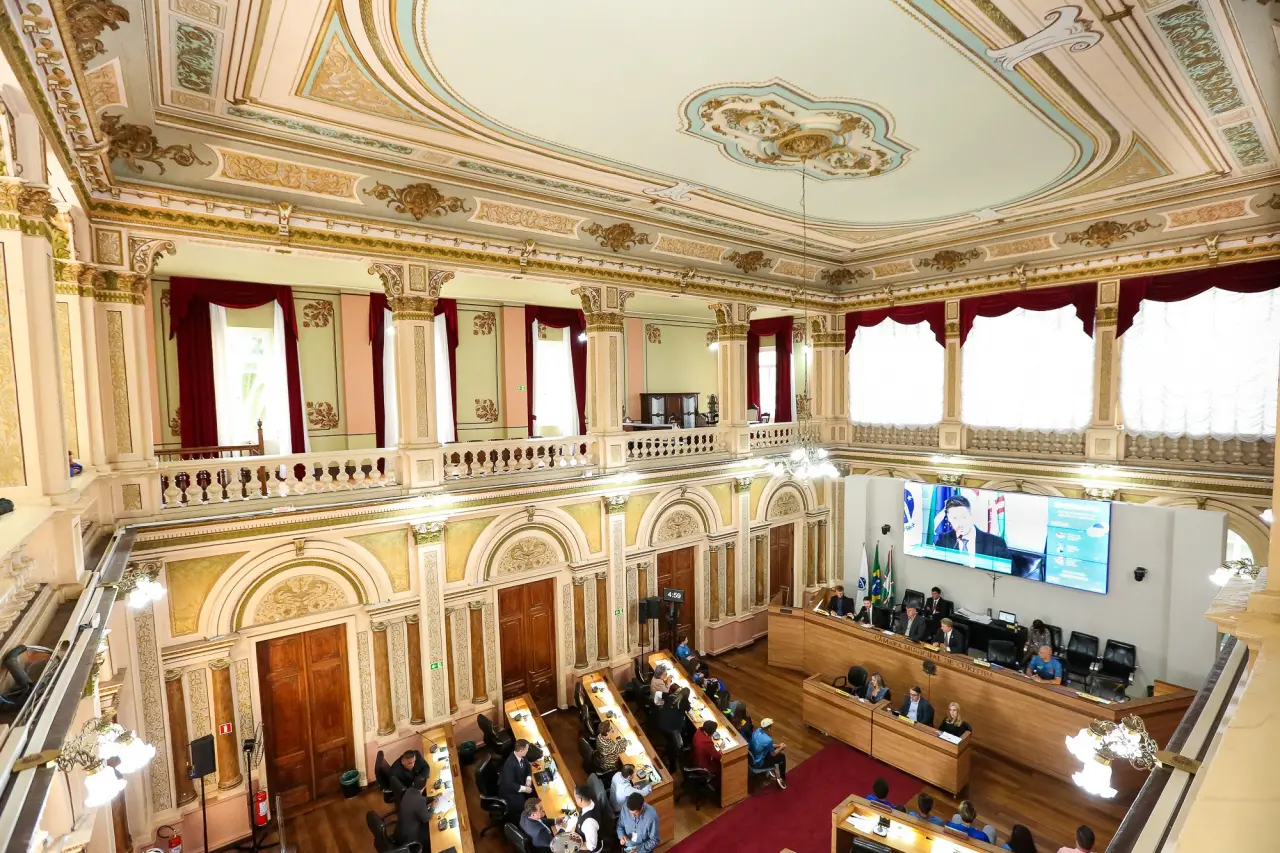
Curitiba City Council approves civic-military schools in second round Curitiba councilors approved, this Wednesday (17), a bill that establishes guidelines for actions aimed at the "strengthening of civic values and ethical and citizen coexistence in the Municipal Public Education Network". It is now up to the mayor to sanction, or not, the law. ✅ Follow the g1 Paraná channel on WhatsApp The wording approved in the second round with 18 favorable votes and 5 against is that of a general substitute, which changed important points of the original bill that dealt with the creation of the Municipal Program of Civic-Military Schools.
Read, below, all the changes. ➡️ A civic-military school has shared management between civilians and the military. While the civilian teaching staff is responsible for the pedagogical part and application of the regular curriculum, the military – usually reservists or police officers – act in administration, infrastructure, and discipline. In the Paraná state education network, 345 schools are adherents to the model. With the change, instead of creating effectively militarized schools, the approved text now encourages practices of discipline and civility within schools, without changing the management model of the units. However, the initiative provides for the participation of public security professionals in schools through agreements. In this text you will read: What does the approved project provide for? What changed between the bill and the general substitute? How did the councilors vote? What does the approved project provide for? Public contest will select 37 professionals for the Curitiba City Council. Rodrigo Fonseca/CMC The approved project directs actions to students from the 6th to the 9th grade of Elementary School.
Of the 188 municipal schools in Curitiba, only 11 offer these classes, since most of the teaching units that have classes at this stage are managed by the State Government. In addition, it provides for mandatory public consultation with the school community before any adherence of the units and conditions the implementation to the decision of the Executive Branch and to budgetary and financial availability. The substitute also provides for articulation between the areas of education and public security of the municipality, in addition to the possibility of collaboration of public security professionals through agreements or cooperation instruments, for the promotion of discipline and conduct of civic-oriented activities. Support for educational management, however, should preferably use the existing staff. The project, however, does not detail how these agreements between schools and public security forces would work. School adherence must consider, in addition to public consultation, social vulnerability indices of the school community and basic education indicators, such as IDEB. What changed between the bill and the general substitute? According to the justification of the substitute, a series of changes were made to adapt the project to the guidelines of the Legal Attorney's Office, the Permanent Commissions of the City Council, and the Municipal Government of Curitiba. They are: 1.
The term "Civic-Military Schools" was removed from the heading and the main definition of the project Original: The initial text was explicit in the creation of the "Municipal Program of Civic-Military Schools". Substitute: The new wording changes the focus to the implementation of "actions aimed at strengthening civic values and ethical and citizen coexistence". 2. Target Audience Original: Did not specify in a restricted way the school years in the body of the main text. Substitute: Clearly defines that the actions must serve Elementary School students (from 6th to 9th grade). 3.
Organization and Personnel (Civil and Military Nucleus) Original: Established the hiring of a civil nucleus (pedagogical management) and a mandatory military nucleus, composed of Military Police or Municipal Guards. Substitute: Although it maintains the collaboration of public security professionals for discipline and civic activities via agreements, the text now emphasizes that support for management should preferably use the existing staff. 4. Public Consultation and Adherence Original: Community approval via consultation was only one of the criteria for implementation. Substitute: Makes public consultation mandatory in all Elementary Schools, and must be carried out within a maximum period of 2 years after the law comes into force to decide on adherence to the model. 5.
Discretion and Budget Original: Did not explicitly mention immediate budgetary limitations in the text of the articles. Substitute: Includes a specific article that conditions the implementation of actions to the discretion (limits of capacity) of the Executive Branch and to effective budgetary and financial availability. 6. Term for Validity Original: The law would come into force on the date of publication. Substitute: Establishes a period of 180 days after publication for the law to begin to take effect. Municipal school of Curitiba Cesar Brustolin/SMCS How did the councilors vote? How did the councilors vote in the second round of the discussion? VIDEOS: Most watched from g1 Paraná Read more news on g1 Paraná.






Sign in to comment on this article.
No approved comments yet.