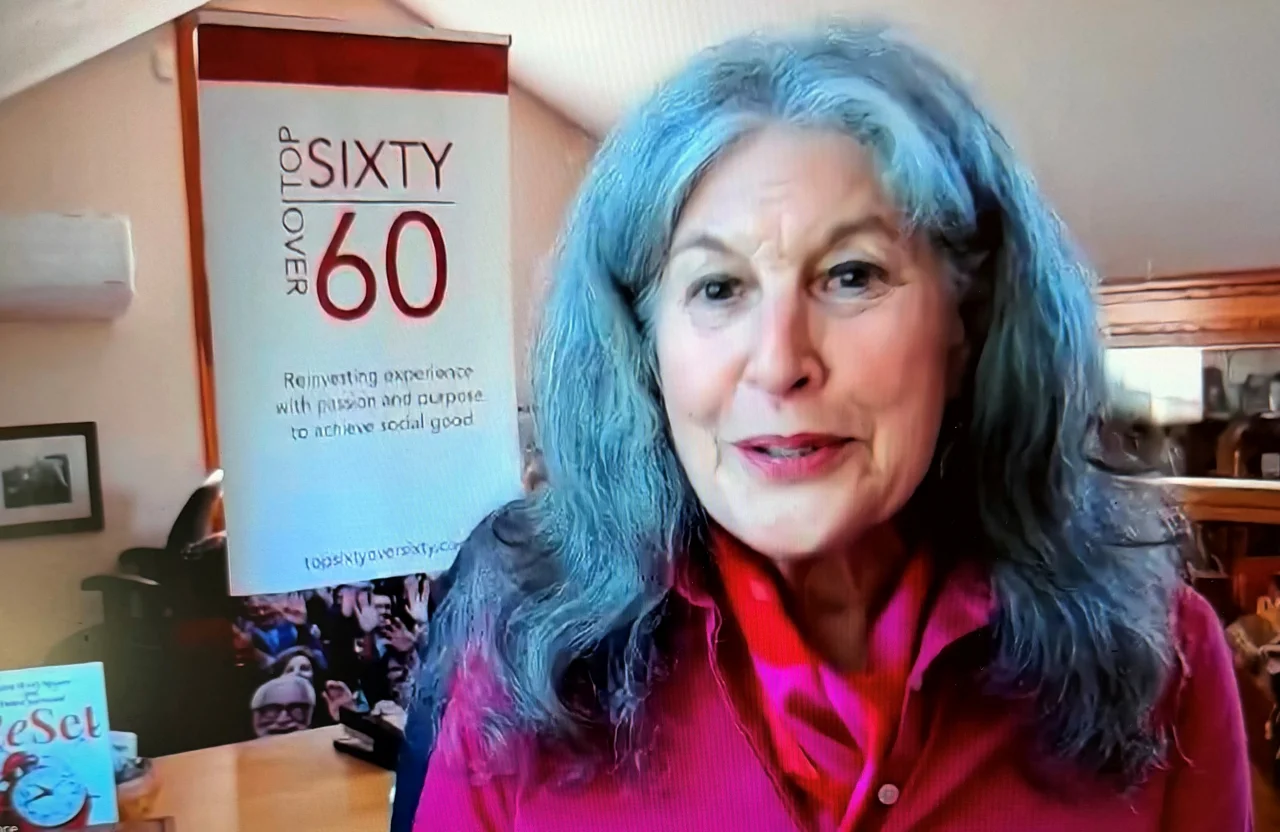
When she was past 65 years old, teacher Helen Hirsh experienced what many elderly people face: she began to lose self-confidence. “It was as if I were irrelevant, invisible.
I felt that others no longer looked to me as a reference, that they didn't value me like before,” she says. Helen Hirsh: the author of ReSet states that it is important to cultivate a “longevity mindset” Reproduction With a five-decade career in education, she decided to delve deeper into the situation she was experiencing.
“It was a turning point for me. I discovered that I was internalizing ageism, this negative view of old age, and that I would end up becoming a self-fulfilling prophecy, meaning I would become increasingly isolated and lost,” she recalls.
Coincidentally, a former student suggested she take a social entrepreneurship course – and that's how she ended up creating Top Sixty Over Sixty, which became a reference in the fight against ageism and for age diversity in Canada. In ReSet: Making the Most of the Rest of Your Life, which she just launched in partnership with Debra Yearwood, Hirsh puts into practice what she lived and learned: “In the first part of the book, I show how ageism must be pointed out, called out, and never minimized, because it leads to isolation, depression, and premature death. In the second part, I bring reflections, tools, and strategies to rewrite this script.” Hirsh's work “dialogues” with another one I recently wrote about.
In Longevity Nation: the people, ideas, and trends changing the second half of our lives, author Michael Clinton states: “We still live with 20th-century thinking, and one of those constructs is that life is short. Therefore, there is a lack of preparation, both physical and mental, to live longer lives.
At 65, people start closing themselves off to new possibilities, based on the belief that their time has passed.” At 77, she proposes that we adopt what she calls a “longevity mindset,” meaning that we are fully aware that our lives – which are increasingly long – must have meaning and purpose. “I started new things at 67 and I want to help the generations that come after us to do the same,” she emphasized in an online lecture I attended.
Here are some of her main suggestions: Become aware: recognize ageism and deconstruct the prejudice. Be ready to show others that, even without the intention to hurt or harm, they diminish the elderly.
An example is how caregivers address them in a infantilized speech, as if they were small children. Ask yourself: what did you not start or stop doing thinking you were too old for it? You need to reconnect with your strengths and motivation, valuing your own wisdom and experience. Reunite with yourself: new purposes, meanings, and opportunities exist at any age. Get involved in causes you believe in, seek interaction with other generations, stay engaged and visible. Sport transforms the routine and mindset of those seeking longevity.






Sign in to comment on this article.
No approved comments yet.