"Fan effect" alters energy consumption and challenges technicians at the Itaipu Power Plant, in Foz
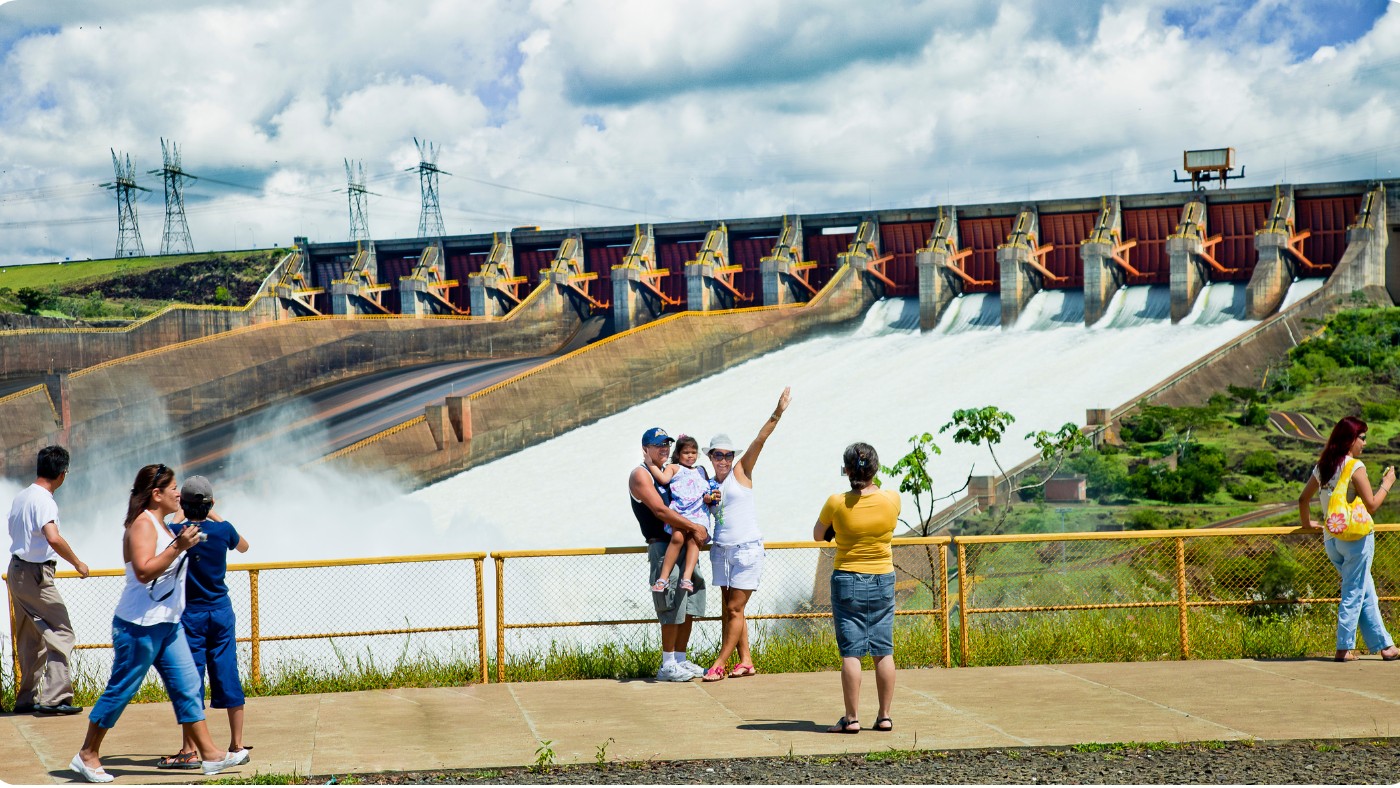
Brazil's World Cup games cause changes in energy consumption across the country and have required a special operation by Itaipu Binacional to ensure electricity supply without interruptions. The hydroelectric plant is one of the largest in the world in generation capacity and is responsible for a large part of the electricity consumed by the country.
According to Itaipu, consumption begins to drop before the match, when many fans are still returning home or preparing to watch the game. During the match, the so-called "fan effect" makes consumption even lower, because millions of people remain in front of the television, paralyzing other activities.
At halftime, consumption rises rapidly with the simultaneous use of household appliances and other devices.
"During the games, we identify a different behavior in energy consumption. At halftime, when people leave the front of the television, they go to the kitchen, open the refrigerator, turn on the oven, and other appliances. This causes a rapid increase in energy demand," explains the superintendent of Operation at Itaipu, Rodrigo Pimenta.
After the final whistle, demand grows again as consumers' routines are resumed.
✅ Follow g1 Foz do Iguaçu on WhatsApp
Itaipu Binacional.
Disclosure/Alexandre Marchetti.
Change in consumption demands special operation
To monitor these fluctuations during the national team's games, Itaipu adjusts energy generation in real-time, in coordination with the National Electric System Operator (ONS).
The special scheme begins about two hours before each match and continues until two hours after the final whistle. The goal is to maintain the balance between energy generated and consumed, avoiding overloads in the National Interconnected System (SIN).
In Brazil's debut against Morocco, for example, Itaipu's supply to the country dropped 7% in the hour leading up to the game. At the end of the match, the system load rose rapidly again: 4,307 megawatts were recovered in just 21 minutes, a volume equivalent to the average consumption of the entire Rio Grande do Sul.
In the match against Haiti, the response was even more intense. About 40 minutes before the game, Itaipu reduced energy supply to Brazil by 17%. After the final whistle, it increased generation by 7% in just 14 minutes to follow the resumption of consumption. Check the chart below.
Energy consumption during Brazil's match against Haiti
Itaipu
The expectation was that the same behavior would be repeated in the match between Brazil and Scotland. However, according to Itaipu, the effect was less noticeable because there was maintenance on Furnas' transmission lines, which limited the variation in the plant's supply. Check the chart below.
Energy consumption during the Brazil vs. Scotland game
Itaipu
According to Itaipu, the expectation is that this behavior will be even more pronounced in this Monday's game (29), against Japan, as it is a decisive match played during the afternoon, when energy consumption is usually higher.
In the Paraguayan national team's games, there is also a change in energy consumption, but on a much smaller scale. This is because the average load of the Paraguayan electrical system represents about 4% of Brazilian demand, making these fluctuations almost imperceptible in the plant's total operation.
Read also:
Feminicide: After saying his wife committed suicide, reserve military officer is arrested on suspicion of feminicide
Scam: Fake lawyer asks for money to release 'indemnity' for elderly person and victim loses R$ 750 thousand
Investigation: 'Everyone who opposed him was threatened,' says prosecutor about doctor who set up an 'apartment' in a hospital
Operational flexibility
Due to its size and technical characteristics, Itaipu has a strategic role in responding quickly to consumption variations. The plant can increase or reduce generation in a few minutes, performing so-called "load ramps."
The hydroelectric plant has 20 generating units. To give you an idea of the structure's capacity, a single Itaipu generating unit produces enough energy to supply a city the size of Curitiba.
Despite the changes caused by the games, the routine of the Control Room remains the same. The hydroelectric plant's operation runs 24 hours a day, seven days a week, with teams continuously monitoring the system to ensure that millions of Brazilians watch the matches without the risk of power outages.
VIDEOS: Most watched from g1 Paraná
Read more news on g1 Oeste e Sudoeste.
'Fan effect': energy consumption drops during Brazil's World Cup games and rises rapidly after the final whistle; understand
"Fan effect" alters energy consumption and challenges technicians at the Itaipu Power Plant, in Foz. Brazil's World Cup games cause changes in energy consumption across the country and have required a special operation by Itaipu Binacional to ensure...






Sign in to comment on this article.
No approved comments yet.