Alan Greenspan, former FED chairman, dies at 100 Alan Greenspan, the economist who led the Federal Reserve (the US central bank) for five consecutive terms and conducted the country's monetary policy under four presidents, has died at 100. The information was released by NBC News this Monday (22). According to his wife, journalist Andrea Mitchell, Greenspan died at home due to complications from Parkinson's disease.
The two had been married for 29 years. 🗒️Have a story suggestion? Send it to g1 “Alan passed away at our home this morning, at 100 years of age, due to complications from Parkinson's disease,” Mitchell said in a statement. “He was a giant who helped shape the US economy for decades, under presidents from both parties, but he was always honest in acknowledging his mistakes,” she said.
“To me, he was my husband, who shaped my life since our first meeting in 1984. He had an immoderate passion for baseball, the Washington Commanders, tennis, golf, and music, especially jazz,” Mitchell added.
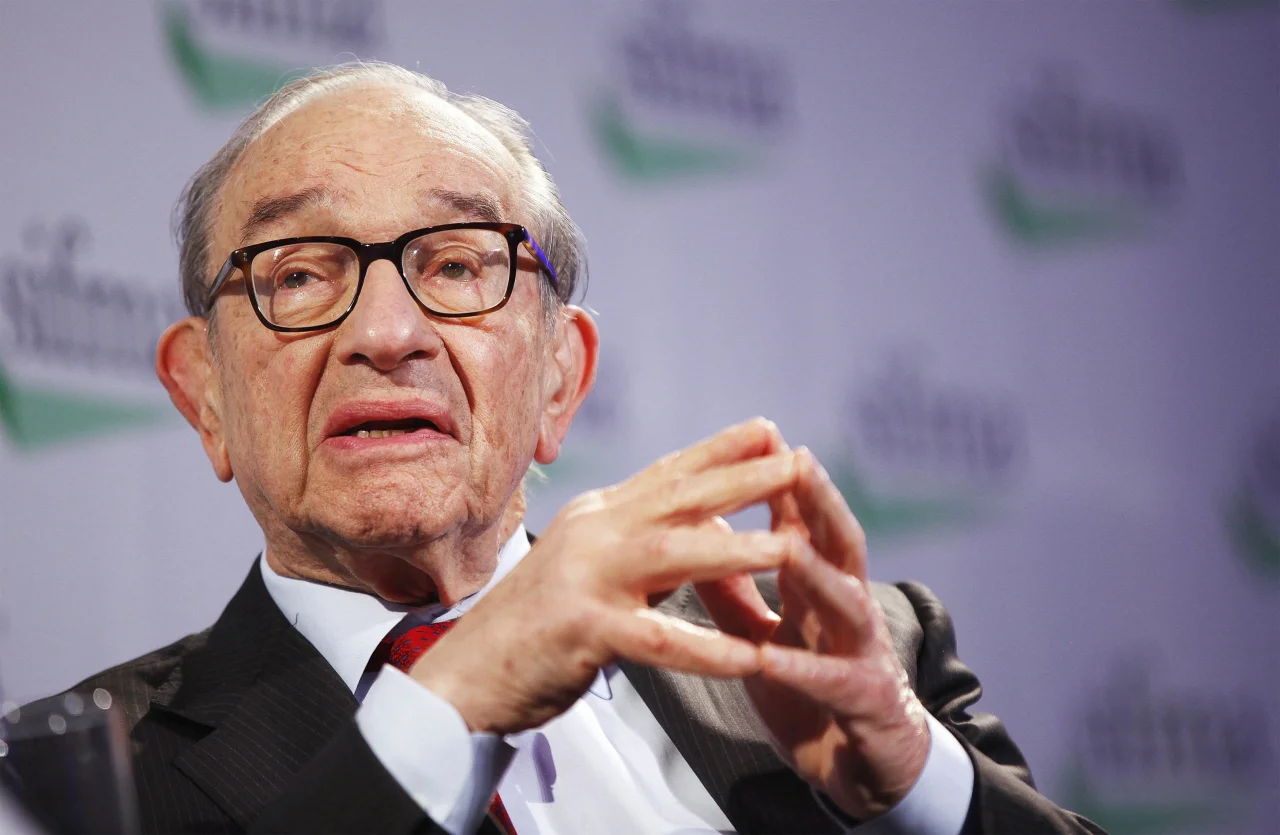
“He will be remembered for his intelligence and his kindness. Being his life partner was the greatest joy of my life.” Education and early career Former Fed chairman Alan Greenspan speaks during the SIFMA annual meeting in New York, October 23, 2012 REUTERS/Lucas Jackson Born on March 6, 1926, in the Washington Heights neighborhood of New York, Alan Greenspan built one of the most influential trajectories in the history of US monetary policy, becoming one of the main references of the American economy in the 20th and early 21st centuries. With a degree in economics from New York University, where he completed his undergraduate and master's degrees, he began his career in the private sector as a consultant, gaining ground in the financial market at a young age.
In the 1950s, he drew closer to the intellectual debate by connecting with writer Ayn Rand, whose defense of the free market and individualism influenced part of his economic view. 🔍 Free market is the idea that the economy works best when businesses and people can buy, sell, and compete with little government interference.
In theory, prices and production are determined by supply and demand. The logic is that this “free competition” helps the economy organize itself more efficiently. In 1968, already established as a consultant, he participated in Richard Nixon's presidential campaign and subsequently joined Gerald Ford's administration as head of the Council of Economic Advisers, contributing to economic policies in a period marked by high inflation. Leadership of the Federal Reserve Alan Greenspan, Federal Reserve chairman (left), makes a statement on July 10, 1991, after President George H.
W. Bush (right) announced his nomination for a second term in office. Reuters After returning to the private sector in the late 1970s, Alan Greenspan was chosen in 1987 by President Ronald Reagan to head the US central bank. At the helm of the country's economic policy, he became known for avoiding sharp interest rate hikes even when there was fear of further price increases.
This stance helped sustain a long period of growth in the American economy and earned him public prominence. Right at the beginning of his term, Greenspan faced the historic stock market crash of 1987 (known as 'Black Monday') and acted quickly to prevent the spread of the crisis, which strengthened his reputation. In the following years, he also bet on the idea that increased economic productivity — especially starting in the 1990s — would help rein in inflation, which influenced many decisions of the central bank. Greenspan spent nearly 19 years at the helm of the Fed, serving through five terms and four US presidents: Ronald Reagan, George H. W.
Bush, Bill Clinton, and George W. Bush.
This made him one of the longest-serving heads in the institution's history. During this period, he dealt with several major economic moments, such as the strong growth of the 1990s, the expansion of the internet and globalization, the bursting of the tech bubble in the early 2000s, and the impacts of the September 11 attacks. His tenure was associated with a period of growth and stability, but also with greater confidence that the market could regulate itself with less government intervention. Later, this view came to be heavily questioned following the 2007-2008 financial crisis. Studies and investigations pointed out that the advocacy for fewer rules for the financial system and tolerance for riskier investments may have contributed to the housing crisis that led to the collapse of the US financial system. Even so, he continued to be seen as a highly influential figure in the economy. After leaving the Fed in 2006, he began working as a consultant and writer, remaining active in economic debates for many years. Defense of central bank independence More recently, amid debates over the independence of the Federal Reserve and political pressures on the US central bank, Greenspan was one of the institution's former chairmen who signed a letter defending the agency's autonomy. The document urged the judiciary to keep Governor Lisa Cook in office while the legality of a potential dismissal was analyzed, warning of risks to the Fed's credibility and economic stability.
Among the signatories were also former officials such as Janet Yellen and Ben Bernanke, as well as former Treasury secretaries Henry Paulson, Timothy Geithner, and Lawrence Summers. In the text, the economists stated that preserving central bank independence is essential to avoid damage to the American economy. This episode occurred amid recurring discussions about the Fed's autonomy and reinforced the institutional framework created since the central bank's founding in 1913 to reduce political interference in its operations. Jerome Powell, who led the Federal Reserve and concluded his term at the head of the institution, also enjoyed public support from Greenspan on different occasions.
In another recent episode, the Department of Justice investigated the costs of renovations at the Fed's headquarters during Powell's tenure, an investigation that was closed in April. In this context, the last three former Federal Reserve chairs — Janet Yellen, Ben Bernanke, and Alan Greenspan — characterized the pressures on Powell as unprecedented. They also compared this type of interference to practices observed in emerging economies, where central bank independence tends to be more vulnerable. *With information from Reuters.






Sign in to comment on this article.
No approved comments yet.