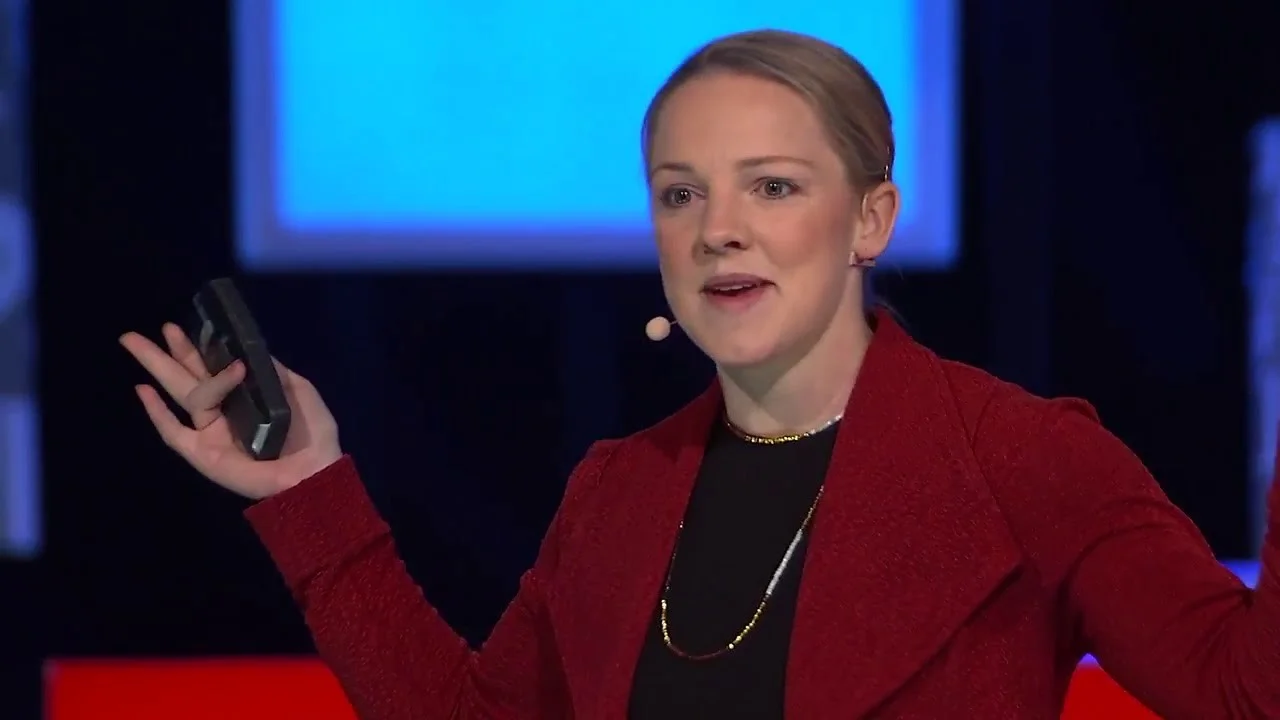
Ministry of Health data reveals significant growth in mental health consultations for children and adolescents Thursday's column showed how motivation and purpose were identified as essential factors at Stanford University's Healthy Aging Conference. Today, I am writing about the intriguing lecture by Alia Crum, a psychology professor at the institution and lead researcher at the Mind & Body Lab.
Her work focuses on how changes in our beliefs can alter objective reality, and her starting point was the placebo effect. It is known that, although a placebo is a medication without any active principle, by taking it and believing in its efficacy, the individual's mind is capable of activating mechanisms that the organism has to heal itself. Psychologist Alia Crum: “Our mental model has the potential to make us stronger” Disclosure “Our minds change reality.
The way we think, how we perceive things, influences our focus, our attention, and affects the final outcome. We can control much more than we imagine, and our mental model has the potential to make us stronger.
Old age can be decline or wisdom. It is not about being false or true, but rather the lenses we use for our experiences,” Crum stated.
The psychologist cited some research that endorses already published studies. In the university cafeteria, the same carrots were presented in two ways: when they were identified as a low-calorie dish, they went unsold; but, when described as a delicacy with citrus sauce, their consumption increased by 45%.
“Beliefs about food shape the body's reaction, and this does not occur only with food: the information I prioritize will affect how my body will react,” she detailed. Another experiment involved 84 hotel maids. Despite the manual labor – which is equivalent to vigorous physical exercise – two-thirds said they did not exercise.
The group was divided into two, and one of them received monitoring to change their view of the activity, coming to see it as healthy “workout.” “The women who changed their mental model showed better blood pressure readings and even lost weight,” she said. A landmark study by researcher Becca Levy pointed out that a negative view of aging was responsible for “stealing” years of life from the elderly.
The lesson? “We need to change the compass regarding what bothers us, what hurts us, and deconstruct the negative views, stigmas, and stereotypes that surround us,” Crum taught. Physiologist Stacy Sims: strength training supports balance, glucose control, and cognitive function throughout life Disclosure Finally, physiologist Stacy Sims emphasized the importance of strength and resistance training for healthy aging: “It is what guarantees the ability to maintain physical attributes as we age. Strength training supports balance, glucose control, and cognitive function throughout life.”
She addressed a relatively new concept in medicine and neuroscience: the muscle-bone-brain axis, which investigates how the musculoskeletal system communicates with the central nervous system through chemical signals. Until recently, science viewed muscles and bones merely as structures for physical support and movement. Today, we know they function as dynamic endocrine organs, capable of sending messages that shape the health, structure, and functioning of the brain.
When we perform strength training, muscle contraction releases substances into the bloodstream called myokines. They have anti-inflammatory action and stimulate the creation of new neural connections, protecting against neurodegenerative diseases. Similarly, during physical impact or resistance training, the skeleton releases bone-derived factors, known as osteokines, influencing muscle mass and glucose control.
“This axis explains why the loss of muscle and bone mass, which accompanies aging, is so closely linked to a state of frailty, fractures, loss of independence, and cognitive decline,” Sims emphasized.






Sign in to comment on this article.
No approved comments yet.